EcoFlow Delta 3 Review (Canada, 2026): Real Prices and Runtimes
Prices verified August 21, 2026 · Version française
The Delta 3 Classic is the heart of EcoFlow’s range: 1,024 Wh of LiFePO4 battery, 1,800 W rated output, 3,600 W surge and an X-Boost mode up to 2,600 W. It recharges from 0 to 80 percent in 45 minutes at a wall outlet. It is the brand’s best-selling format in Canada — enough reserve for a fridge, the router and the lights through a short outage, in a 12.1 kg box.
This review covers verified Canadian prices, appliance-by-appliance runtimes, the difference between the four Delta 3 models, and the honest limits of the 1 kWh format before you buy.
Disclosure: some EcoFlow links on this page are affiliate links. BranchéQC may earn a commission at no extra cost to you.
The Delta 3 Classic at a glance
| Spec | Delta 3 Classic |
|---|---|
| Capacity | 1,024 Wh (LiFePO4, 51.2 V 20 Ah) |
| Rated output | 1,800 W — 3,600 W surge |
| X-Boost | 2,600 W |
| Wall recharge | 0 to 80% in 45 minutes |
| Solar input | 500 W maximum |
| Weight | 12.1 kg (26.7 lb) |
| Stated lifespan | About 10 years, per EcoFlow |
| Warranty | 5 years (3 + 2 with app registration) |
All values come from the official ca.ecoflow.com listing, verified August 21, 2026.
EcoFlow Delta 3 Classic$699$1,199Check today's price ↗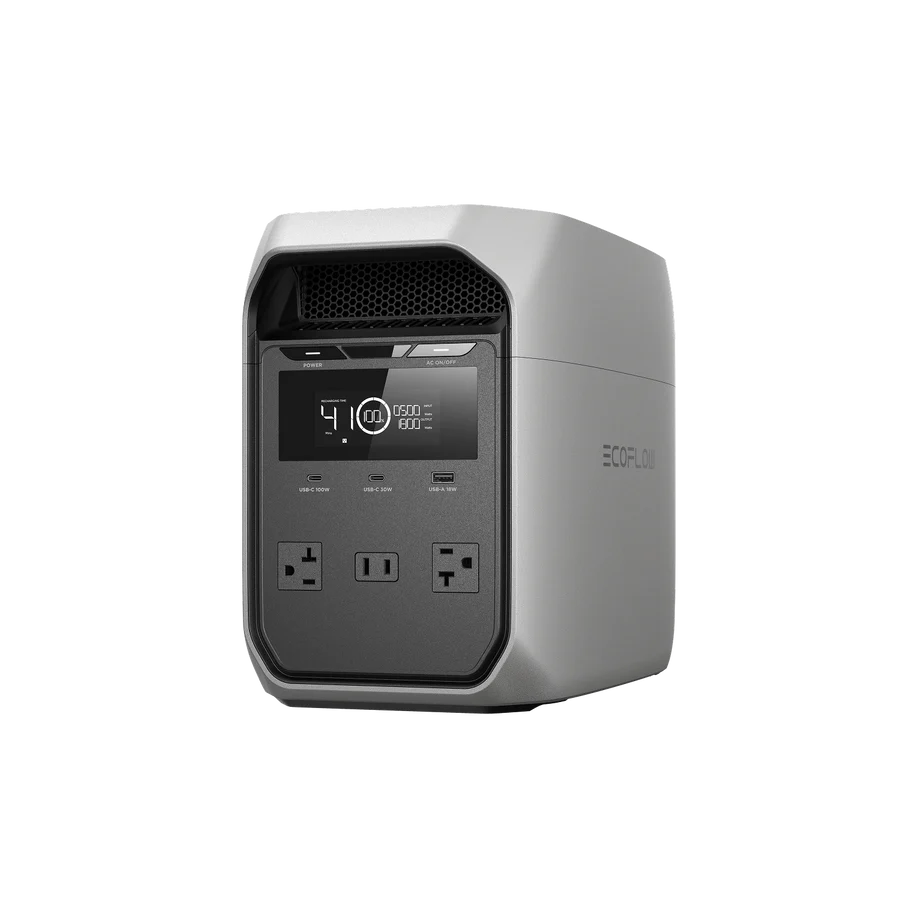
Prices in Canada (checked August 21, 2026)
| Model | Capacity | Price checked | List price |
|---|---|---|---|
| Delta 3 Classic | 1,024 Wh | $699 | $1,199 |
| Delta 3 Plus | 1,024 Wh (expandable) | $749 | $1,099 |
| Delta 3 1500 | 1,536 Wh | $1,099 | $1,299 |
| Delta 3 Max | 2,048 Wh | $1,199 | $2,099 |
The EcoFlow golden rule: never pay list price. Promotions return almost every month — if the listing sits at the top, wait a week or two. See all EcoFlow prices in Canada, and the EcoFlow comparison to rank every model by price per watt-hour.
Real runtimes: what 1,024 Wh powers through an outage
The figures below are our estimates, based on typical Canadian household loads and rounded for inverter losses and compressor cycling. They are not EcoFlow published data.
| Appliance | Draw | Estimated runtime |
|---|---|---|
| Refrigerator (150 W avg cycle) | ~3.6 kWh/day | 6–7 h |
| Router + modem + phones | ~25 W | ~35 h |
| LED lighting (5 rooms) | ~50 W | ~17 h |
| CPAP machine | 40 W | ~20 h |
| TV + console | ~150 W | ~6 h |
| 1,000 W microwave | spot use | ~20 three-minute runs |
| 1,500 W baseboard heater | 1,500 W | ~35 min — do not count on it for heat |
The honest read: for an outage of a few hours — the most common scenario — the Delta 3 covers an apartment or small household’s essentials without effort. For a 24-hour family outage, the fridge alone would drain the reserve early: that is Delta 3 Max territory. And electric heating is out of reach of any station this size.
The 1,800 W output and 2,600 W X-Boost handle kettles, toasters and coffee makers — resistive loads that trip many smaller stations.
Classic, Plus, 1500 or Max: the decision
EcoFlow puts the “Delta 3” name on four machines, and the confusion is the number-one cause of bad purchases in this range.
Classic vs Plus — one difference: the expansion battery. Same base capacity, same chemistry, same warranty. The Plus accepts a battery that doubles the reserve; the Classic is fixed at 1,024 Wh for life. The gap on our check was $50 — the cheapest option in the catalogue that changes what the machine can do three years from now.
1500 vs Max — check both listings the day you buy: on August 21, 2026 the 1500 sold at $1,099 and the Max at $1,199. A $100 gap for double the capacity plus expansion support — the Max wins for almost everyone. These two prices move independently; when they converge, there is no debate at all.
The ten-second rule: you know 1,024 Wh is enough forever (condo, camping, CPAP, remote work) → Classic at $699. Any doubt about future needs → Plus at $749. Protecting a family in a house → Max at $1,199.
EcoFlow Delta 3 Max (double the reserve)$1,199$2,099Check today's price ↗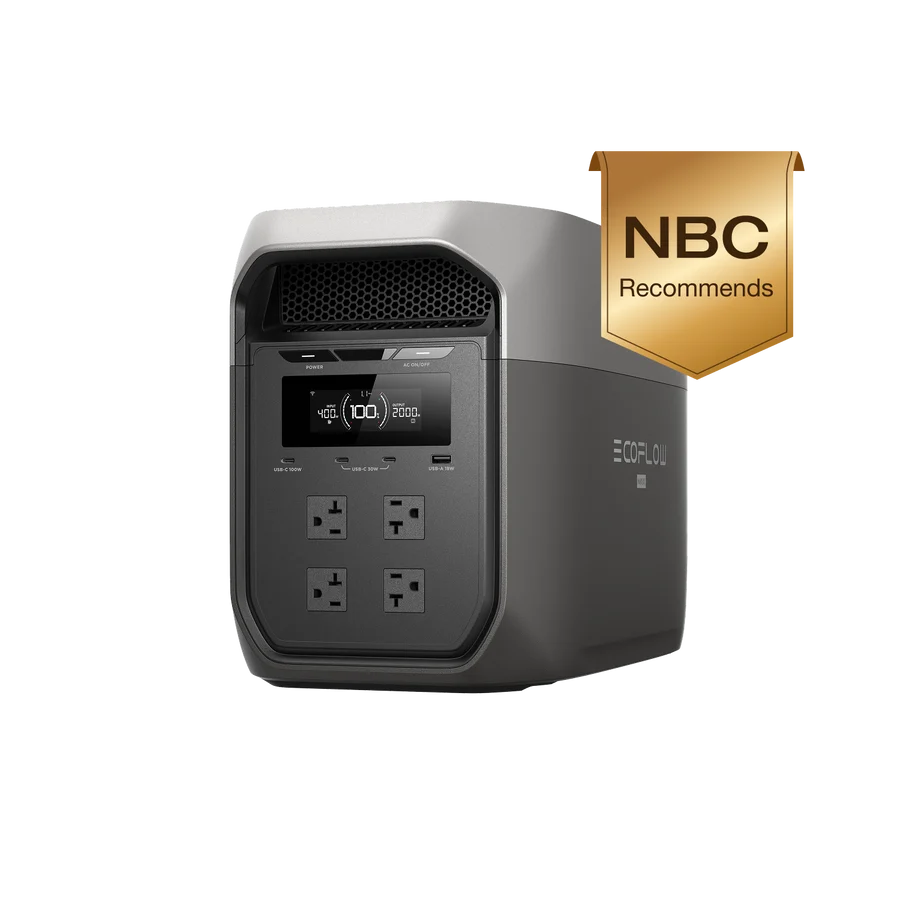
Charging: wall, solar, car
• Wall outlet: 0 to 80 percent in 45 minutes, per EcoFlow. Storm announced on the radio? Plug it in when you get home, it is full before dinner.
• Solar: up to 500 W input — two 220 W folding panels fill it in a few hours of good sun. Through a long outage it regenerates by day while you draw by night.
• Car 12 V: top-up charging on the road; too slow as a main solution.
Winter use in Canada
Like every LFP battery, the Delta 3 has winter rules:
• It refuses to charge below 0 °C (internal protection). Store it indoors — basement, heated garage — never in a shed in January.
• It can discharge below zero, but effective capacity drops in deep cold.
• The Canadian reflex: keep it charged at 100 percent from November to March. LFP chemistry tolerates full-charge storage very well.
Verdict
The Delta 3 Classic is the serious entry point to the EcoFlow range: LFP chemistry, 1,800 W with 2,600 W X-Boost, 80 percent charge in 45 minutes and a promotional price of $699 on our check. For a condo, an apartment or a first piece of backup equipment, it is a hard purchase to criticize.
Its limits are the format’s: 1,024 Wh is a short outage, not an ice storm. And the gap to the Delta 3 Max has narrowed enough that a family in a house should check both prices before deciding — $500 to double the reserve is rarely a bad trade.
Comparing brands first? Our backup power brand hub puts EcoFlow and Jackery side by side.
Frequently asked questions
What is the difference between the Delta 3 and the Delta 3 Classic?
Same machine. EcoFlow renamed the original Delta 3 “Delta 3 Classic” when the Delta 3 Plus arrived, to separate the base version from the one that accepts an expansion battery.
How much does the EcoFlow Delta 3 cost in Canada in 2026?
CAD $699 on our August 21, 2026 check of ca.ecoflow.com, against a $1,199 list price. Promotions return almost every month — never pay list price.
How powerful is the Delta 3 really?
1,800 W rated output, 3,600 W surge, and an X-Boost mode that reaches 2,600 W for resistive loads like kettles and toasters, per EcoFlow's official listing.
How long does the Delta 3 take to recharge?
0 to 80 percent in 45 minutes from a wall outlet, per EcoFlow. Solar input maxes out at 500 W.
Can the Delta 3 run a refrigerator?
Yes — power is no problem, a fridge draws about 150 W on an average cycle. The limit is the reserve: we estimate 6 to 7 hours of runtime on 1,024 Wh. For a 24-hour outage you want the Delta 3 Max.
Delta 3 Classic or Delta 3 Max?
On our August 21, 2026 check, the Max cost $500 more ($1,199 vs $699) for double the capacity plus expansion-battery support. If the goal is keeping a fridge alive through a full day, the Max is the right format.
Is the Delta 3 1500 worth its price?
Check both listings the day you buy. On August 21, 2026 the 1500 sold for $1,099 — only $100 under the Delta 3 Max, which offers 2,048 Wh and accepts an expansion battery. At a $100 gap, the Max is the better buy for almost everyone.
Is the Delta 3 safe indoors?
Yes — no emissions, no carbon monoxide. That is the fundamental advantage over a gas generator, which must stay outside.