

Top choices
Specs as stated on the manufacturers' listings; the price shows on the retailer's page. Self-heating · most expandablePower Queen 12V 100Ah Self-Heating LiFePO4 (Bluetooth)A second self-heating choice with more published numbers: a 100 W heated pad that switches on below 41°F (5°C), heating times of 30 to 100 minutes depending on the temperature, a 100A BMS, 1280Wh and 1280 W of output, IP65, and expansion up to 4 in series and 4 in parallel for a 48V 400Ah bank, as listed. It can be charged from a LiFePO4 charger, solar or a generator.Watch out: The listing contradicts itself on the case: "Group 24" in the title, "Group 31 size" with 13 × 6.77 × 8.43 in dimensions in the bullets. Measure your battery box against those dimensions before you order.Check price on Amazon.ca ↗
 Cottage and off-grid solar · 300AhVATRER 12V 300Ah Self-Heating LiFePO4For a cottage, a cabin or an off-grid solar setup where one big battery beats a row of small ones. The listing states 300Ah at 12 V, a 200A BMS with low and high temperature cut-off and cell balancing, 5000+ cycles at 100% depth of discharge, and a self-heating film that uses the charging current to warm the cells from below 32°F up to 41°F before normal charging resumes. The app shows voltage, current, capacity, temperature, cycle count and faults.Watch out: The heater only starts when the charging current exceeds 10A, so a weak trickle charge will not trigger it. The listing warns it is not a starter battery and says to read the manual: "danger - thermal runaway". Series or parallel limits are not stated.Check price on Amazon.ca ↗
 Plain 12V 100Ah · heated spacesRedodo 12V 100Ah LiFePO4The no-frills 12V 100Ah for a battery that stays above freezing: a basement solar or backup setup, a heated RV, a boat used in summer. The listing gives the cycle ladder in full (4000 at 100%, 6000 at 80%, 15000 at 60% depth of discharge), a 100A BMS, a 3% self-discharge rate, a Group 31 box fit, and up to 4 in series or 4 in parallel. Redodo recommends a 14.6V 20A LiFePO4 charger and a 30 to 70 lb thrust trolling motor.Watch out: The bullets list no low-temperature charge protection and no heater: in a Quebec winter, charge it only above 0°C, as Health Canada advises for any lithium-ion battery. Not for starting an engine or a golf cart, per the listing.Check price on Amazon.ca ↗
A 12 V LiFePO4 battery (lithium iron phosphate) is the lithium replacement for the lead-acid or AGM deep cycle battery in an RV, a trailer, a boat, a trolling motor, a cottage solar setup or a battery backup. Most listings look alike: 12V 100Ah, 1280Wh, a built-in BMS, thousands of cycles. In Canada, the line that separates them is the one about charging in the cold.
The short answer
- Charges in a Quebec winter: the LiTime 12V 100Ah Self-Heating (Bluetooth, Group 24), or the Power Queen 12V 100Ah Self-Heating with a 100 W heated pad.
- Cottage or off-grid solar, one big battery: the VATRER 12V 300Ah Self-Heating, 200A BMS.
- Stays in a heated space: the Redodo 12V 100Ah, or the Renogy Core Mini 100Ah when the box is small.
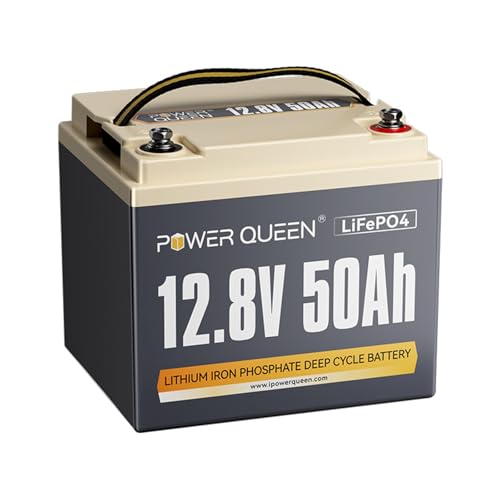
- Kayak or small trolling motor: the Power Queen 12.8V 50Ah at 11.57 lb.
How we picked, and what we did not do: we have not tested any of these batteries. We looked for one model per real use (self-heating 100Ah, self-heating 300Ah, plain 100Ah, compact 100Ah, more capacity in a Group 31 box, a battery and charger kit, a light 50Ah), and read every specification from the manufacturer’s Amazon.ca listing on November 27, 2026. Every product on a card was in stock in Canada that day; several self-heating models from LiTime, Power Queen and Renogy were low in stock or on back order and were left out. Where a listing leaves a number out, we write “not stated”; where it contradicts itself, we say so. Safety advice comes from Health Canada only. Links to Amazon are affiliate links; BranchéQC may earn a commission at no extra cost to you. We do not write prices by hand: the button says “Check price on Amazon.ca” and the Amazon page is what counts.
Self-heating and low-temperature charging: the Canadian spec
Health Canada's lithium-ion battery safety page is short on this point: do not attempt to charge in below-zero temperatures. A battery in a trailer at the end of the driveway, a boat in October or an unheated cottage will often sit below zero. Listings deal with it in three ways, and you should know which one you are buying.
1. Low-temperature charge cut-off
The BMS refuses to charge until the cells warm up. The Renogy Core Mini blocks charging below 0°C, the Redodo 165Ah below 32°F. It protects the battery, but in January a solar panel or a charger may do nothing for days. Note that this is about charging: the Redodo 165Ah keeps discharging down to -4°F (-20°C), as listed.
2. Self-heating battery
A heating film or pad inside the case uses the incoming charge to warm the cells, then charging starts. The LiTime 100Ah heats below 41°F (5°C) and starts charging at 50°F (10°C); the Power Queen 100Ah has a 100 W pad that runs 30 to 100 minutes depending on the temperature; the VATRER 300Ah heats from below 32°F to 41°F, but only when the charging current exceeds 10A. In every case the heater runs from the charger, solar or alternator: an unplugged battery does not keep itself warm.
3. No cold-charging protection stated
Some listings, including the Redodo 100Ah and the Power Queen 50Ah, state no low-temperature charge protection in their bullets. That is fine in a heated basement or a summer boat. For winter, either choose a self-heating model or bring the battery inside before you charge it. The Eco-Worthy kit's listing pauses charging only at -7°C, below Health Canada's threshold, so treat it the same way.
The eight 12V LiFePO4 batteries, compared on published specs
Every figure is the manufacturer’s own, from the Amazon.ca listing. Where a listing gives no number, the table says so rather than guessing.
| Model | Capacity | Cold charging | BMS | Cycles (listed) | Series / parallel | Size / weight | Extras |
|---|---|---|---|---|---|---|---|
| LiTime 12V 100Ah Self-Heating LiFePO4 (Bluetooth, Group 24) | 12V 100Ah | Self-heating: heats below 41°F (5°C) when charged, charges from 50°F (10°C) | Not stated (low-temp protection listed) | 4000+ at 100% DOD | Not stated | Group 24, 22.71 lb | Bluetooth 5.0 app, 2 heating modes |
| Power Queen 12V 100Ah Self-Heating LiFePO4 (Bluetooth) | 12V 100Ah, 1280Wh | Self-heating: 100 W heated pad, starts below 41°F (5°C), 30-100 min | 100A | 4000+ at 100% DOD (title: 15000) | Up to 4P4S (48V 400Ah) | 13 × 6.77 × 8.43 in (listing says Group 31 size; title says Group 24) | Bluetooth, IP65 |
| VATRER 12V 300Ah Self-Heating LiFePO4 | 12V 300Ah | Self-heating below 32°F when charging current exceeds 10A, stops at 41°F | 200A, low and high temp cut-off | 5000+ at 100% DOD | Not stated | 15.12 × 7.64 × 9.76 in | App monitoring (voltage, current, temperature, cycles) |
| Redodo 12V 100Ah LiFePO4 | 12V 100Ah, 1280Wh | Low-temp charge protection not stated | 100A | 4000 at 100% DOD, 6000 at 80%, 15000 at 60% | Up to 4S or 4P | 33.02 × 17.2 × 21.41 cm, 11.52 kg (Group 31 box) | 3% self-discharge listed |
| Renogy Core Mini 12V 100Ah LiFePO4 (Group 22NF) | 12V 100Ah | Blocks charging below 0°C (no heater) | 100A, peak 300A for 5 s | 4,000-24,000 | 4S, 8P or 4S4P (up to 20.48kWh) | 9.02 × 5.43 × 8.39 in (Group 22NF) | IP65, mounts on its side; 5-year prorated warranty |
| Redodo 12V 165Ah LiFePO4 (Bluetooth, Group 31) | 12V 165Ah (2112Wh in bullets, 2212Wh in title) | Stops charging below 32°F, stops discharging below -4°F | 165A | 4000+ | Not stated | Group 31 | Bluetooth 5.0, IP65 |
| ECO-WORTHY 12V 100Ah LiFePO4 + 20A Charger Kit | 12V 100Ah | Charging pauses at 19.4°F (-7°C), resumes above 32°F (0°C) | 100A | Not stated in bullets | Not stated | Not stated | 12V/24V 20A charger with LiFePO4 activation; flame-retardant case |
| Power Queen 12.8V 50Ah LiFePO4 | 12.8V 50Ah, 640Wh | Low-temp protection not stated | 50A | 4000+ at 100% DOD | Up to 4P4S | Mini size, 11.57 lb (5.2 kg) | IP65 |
Which 12V lithium battery for your use
LiTime 12V 100Ah Self-Heating LiFePO4 (Bluetooth, Group 24)12V 100Ah · Best overall · self-heating for winterThe one to buy if your battery lives in a trailer, a van, a boat or a cottage that freezes. The listing describes two heating modes: in Regular mode it starts heating below 41°F (5°C) when a charge comes in and only begins charging once it reaches 50°F (10°C). An Energy-Efficient mode is also listed. Bluetooth 5.0 shows the charge level in the LiTime app, it fits standard Group 24 trays, weighs 22.71 lb and lists 4000+ cycles at 100% depth of discharge.Watch out: The heater runs on the incoming charge, so it needs a charger, solar or an alternator connected: it does not warm a battery sitting unplugged. BMS current and series or parallel limits are not stated in the listing bullets.Check price on Amazon.ca ↗Power Queen 12V 100Ah Self-Heating LiFePO4 (Bluetooth)12V 100Ah, 1280Wh · Self-heating · most expandableA second self-heating choice with more published numbers: a 100 W heated pad that switches on below 41°F (5°C), heating times of 30 to 100 minutes depending on the temperature, a 100A BMS, 1280Wh and 1280 W of output, IP65, and expansion up to 4 in series and 4 in parallel for a 48V 400Ah bank, as listed. It can be charged from a LiFePO4 charger, solar or a generator.Watch out: The listing contradicts itself on the case: "Group 24" in the title, "Group 31 size" with 13 × 6.77 × 8.43 in dimensions in the bullets. Measure your battery box against those dimensions before you order.Check price on Amazon.ca ↗VATRER 12V 300Ah Self-Heating LiFePO412V 300Ah · Cottage and off-grid solar · 300AhFor a cottage, a cabin or an off-grid solar setup where one big battery beats a row of small ones. The listing states 300Ah at 12 V, a 200A BMS with low and high temperature cut-off and cell balancing, 5000+ cycles at 100% depth of discharge, and a self-heating film that uses the charging current to warm the cells from below 32°F up to 41°F before normal charging resumes. The app shows voltage, current, capacity, temperature, cycle count and faults.Watch out: The heater only starts when the charging current exceeds 10A, so a weak trickle charge will not trigger it. The listing warns it is not a starter battery and says to read the manual: "danger - thermal runaway". Series or parallel limits are not stated.Check price on Amazon.ca ↗Redodo 12V 100Ah LiFePO412V 100Ah, 1280Wh · Plain 12V 100Ah · heated spacesThe no-frills 12V 100Ah for a battery that stays above freezing: a basement solar or backup setup, a heated RV, a boat used in summer. The listing gives the cycle ladder in full (4000 at 100%, 6000 at 80%, 15000 at 60% depth of discharge), a 100A BMS, a 3% self-discharge rate, a Group 31 box fit, and up to 4 in series or 4 in parallel. Redodo recommends a 14.6V 20A LiFePO4 charger and a 30 to 70 lb thrust trolling motor.Watch out: The bullets list no low-temperature charge protection and no heater: in a Quebec winter, charge it only above 0°C, as Health Canada advises for any lithium-ion battery. Not for starting an engine or a golf cart, per the listing.Check price on Amazon.ca ↗Renogy Core Mini 12V 100Ah LiFePO4 (Group 22NF)12V 100Ah · Most compact 100AhFor a tight battery box in a van, a small boat or a cottage closet. Renogy lists Group 22NF dimensions of 9.02 × 5.43 × 8.39 inches, mounting in any orientation except upside down, a 100A BMS that blocks charging below 0°C, IP65 with metal cell spacers against vibration, and the widest expansion here: 4 in series, 8 in parallel or 4S4P, up to 20.48kWh. The listing states a 5-year prorated material and workmanship warranty.Watch out: No heater: below freezing it simply refuses to charge until it warms up. Bluetooth is not built in; app monitoring needs a Renogy 300A shunt sold separately.Check price on Amazon.ca ↗Redodo 12V 165Ah LiFePO4 (Bluetooth, Group 31)12V 165Ah (2112Wh in bullets, 2212Wh in title) · More capacity in a Group 31 boxWhen a 100Ah is not quite enough but a second battery will not fit: the listing puts 165Ah into a Group 31 case with a 165A BMS, Bluetooth 5.0 for voltage, capacity and state of charge, IP65, and 4000+ cycles. Its low-temperature protection stops charging below 32°F (0°C) and stops discharging below -4°F (-20°C).Watch out: No heater, and the listing gives two different energy figures (2212Wh in the title, 2112Wh in the bullets). Series or parallel limits are not stated.Check price on Amazon.ca ↗ECO-WORTHY 12V 100Ah LiFePO4 + 20A Charger Kit12V 100Ah · Battery + charger in one boxFor a first lithium setup, a backup battery in the basement or a trolling motor, when you do not own a LiFePO4 charger yet. The kit pairs a 12V 100Ah with a 12V/24V 20A smart charger that recognises the voltage, lets you set the current, charges STD and AGM batteries too, and can wake a LiFePO4 battery whose BMS shut it off after over-discharge. Eco-Worthy states a full charge in about 5 hours and a flame-retardant case.Watch out: The listing's cold-weather wording lets charging continue until the cells reach -7°C: Health Canada advises not charging lithium-ion batteries below zero, so keep it above freezing when it charges. Battery and charger ship separately and may arrive on different days.Check price on Amazon.ca ↗Power Queen 12.8V 50Ah LiFePO412.8V 50Ah, 640Wh · Kayak, fish finder, small trolling motorThe light one you can carry down to the dock: 11.57 lb (5.2 kg) for 640Wh, a 50A BMS, IP65 and 4000+ cycles at 100% depth of discharge, as listed. Sized for a kayak or a small-boat trolling motor, a fish finder, camping lights or a small solar setup, and expandable up to 4 in series and 4 in parallel.Watch out: Half the energy of a 100Ah, so a full day on a bigger trolling motor may need two. The listing states no low-temperature charge protection, and Power Queen says it is an energy storage battery, not a starting battery.Check price on Amazon.ca ↗


RV, boat, trolling motor, cottage or sump pump backup
- Lithium RV battery. The house battery in a trailer or motorhome, recharged by the converter, the tow vehicle or solar. A self-heating model is the safe bet for spring and fall camping in Quebec. Check that the converter or DC-DC charger has a lithium profile.
- Deep cycle marine battery and trolling motor. Redodo sizes its 100Ah for a 30 to 70 lb thrust trolling motor; the Power Queen 50Ah is the light option for a kayak or a fish finder. Several listings state IP65, which covers splashes and dust, not submersion. Keep the starting battery separate: none of these is a starter.
- Cottage and off-grid solar. A larger battery such as the VATRER 300Ah or the Eco-Worthy 12V 314Ah (LED display, 200A BMS, expandable to 4P2S or 2P4S, same brand and model only, as listed) pairs with panels and a charge controller. Our French guide to portable solar kits in Quebec covers the panel side, and the one on solar storage batteries covers grid-tied home systems.
- Sump pump backup. Battery backup sump pumps run on a 12 V battery; read the pump's manual for the battery type and charger it supports before choosing lithium. Our French guide to sump pumps in Quebec explains how a battery backup works.
LiFePO4 vs AGM and lead-acid deep cycle batteries
A deep cycle battery is built to be drained and recharged over and over, unlike a car battery that gives a short burst to start an engine. Lead-acid, AGM and LiFePO4 can all be deep cycle batteries. The listings here make the case for lithium in their own words: Redodo states 4000 cycles at 100% depth of discharge against 200 to 500 for lead-acid, a 3% self-discharge rate, and a 100Ah that weighs 11.52 kg; LiTime states its 100Ah is 63% lighter than a 12V 100Ah lead-acid battery. Those are the makers' comparisons, not ours.
Lead-acid and AGM batteries, the ones you find at Costco or Canadian Tire, still have two advantages: they accept a charge in the cold without a heater, and they work as starting batteries. If you need to start an engine, keep a lead-acid or AGM starting battery and use lithium for the house or the trolling motor. 6 V deep cycle batteries, used in pairs in some RVs and golf carts, are lead-acid territory; the lithium listings here are all 12 V nominal.
12V 100Ah, 200Ah, 300Ah, and Group 24, 27, 31 sizes
Ah (amp-hours) is capacity; the listings convert it to watt-hours for you, 1280Wh for a 12V 100Ah. A 12V 200Ah is usually sold either as one larger case or as two 100Ah batteries in parallel: in stock on November 27, 2026, the DC HOUSE 12V 200Ah, sold as 2 packs of 100Ah (Bluetooth, Group 24 size, low-temp protection, 100A BMS, as listed). The big single batteries here are the Redodo 165Ah, the VATRER 300Ah and the Eco-Worthy 314Ah.
Group 24, 27 and 31 are battery case sizes from the lead-acid world, and lithium makers use them to say which tray their battery fits: LiTime's self-heating 100Ah is Group 24, Redodo's 100Ah and 165Ah fit Group 31, Renogy's Core Mini is the smaller Group 22NF. Group names describe the box, not the capacity, so always compare the dimensions on the listing with your tray. For a small 12V 50Ah, Eco-Worthy's 12V 50Ah adds an XT60 connector and low-temp protection, as listed.
BMS, cycles, and series or parallel
The BMS (battery management system) is the electronics inside the case that cut the battery off on overcharge, over-discharge, overcurrent, short circuit and temperature. Its rating, 50A to 200A here, is the most current the battery is designed to deliver continuously. Cycle counts depend on depth of discharge: Redodo lists 4000 at 100%, 6000 at 80% and 15000 at 60%, which is why some titles say “15000 cycles” while the bullets say 4000+.
Series raises voltage (two 12 V batteries make 24 V, four make 48 V, which is what a 24V or 48V LiFePO4 bank is); parallel adds capacity at the same voltage. Only the listing tells you the limit: up to 4S or 4P for Redodo, 4P4S for Power Queen, 4S, 8P or 4S4P for Renogy, while LiTime's self-heating and the VATRER do not state one. Use identical batteries in a bank, and for anything tied into a home's wiring, call an electrician.
LiFePO4 battery charger: what to use
A LiFePO4 battery wants a charger with a lithium or LiFePO4 profile. Redodo recommends a 14.6V 20A LiFePO4 charger for its 100Ah. The Eco-Worthy kit includes a 12V/24V 20A charger that can also wake a LiFePO4 battery whose BMS has shut it off. Solar charge controllers, RV converters and DC-DC chargers need a lithium setting too. Health Canada advises using only chargers that carry a recognized Canadian certification mark such as CSA, cUL or cETL. For multi-chemistry chargers, see our guide to the best car battery charger in Canada.
18650 batteries: a different product, safety first
The 18650 is a small cylindrical lithium-ion cell used inside flashlights, vape devices, laptop packs and many battery packs. It is not a 12 V deep cycle battery and you should not build one from loose cells. Health Canada is direct: never modify, tamper with or build your own lithium-ion batteries, and do not use batteries that are swollen, dented or damaged. If a device takes 18650s, use the cells and the charger its manufacturer specifies, from a reputable source. We do not link loose cells on this page.
Storing, charging and recycling: what Health Canada says
- No charging below zero. Choose a self-heating battery for winter charging, or bring the battery into a heated space first.
- Winter storage. Health Canada says to store lithium-ion batteries with about a 50% charge when they will not be used for long periods. Check your battery's manual for its own storage advice.
- Damage. Do not use a damaged or modified battery.
- Chargers. Use chargers with a recognized Canadian certification mark (CSA, cUL or cETL).
- End of life. Health Canada considers batteries hazardous waste: never in the household garbage. In Quebec, use a battery drop-off point or your municipal eco-centre.
LiFePO4 battery or portable power station?
A bare 12 V battery has terminals, nothing else: you add the inverter, the charger, the fuses and the cables. A portable power station puts a lithium battery, an inverter, outlets and a charger in one case you can carry, and many now use LiFePO4 cells. For a power outage at home with no wiring, a power station is often simpler; for an RV, a boat or a solar build, the bare battery is the usual choice. We compare Jackery, EcoFlow, Bluetti and Anker in our guide to the best portable power station in Canada (in French: meilleure station d'énergie portable).
Where to buy a LiFePO4 battery in Canada
| Retailer | Strength | Note |
|---|---|---|
| Amazon.ca | LiTime, Power Queen, Redodo, Renogy, Eco-Worthy, VATRER and more | Self-heating models go low in stock in late fall; check the exact model |
| Brand websites | LiTime and Eco-Worthy run Canadian stores; Canbat sells from its own site | Compare warranty terms in Canada before ordering |
| Canadian Tire | Lists RockSolar 12V 100Ah LiFePO4 | Also the usual place for lead-acid and AGM deep cycle batteries |
| Costco | Deep cycle batteries | Check the chemistry: many are lead-acid |
Frequently asked questions
What is the best LiFePO4 battery in Canada?
For most Canadian uses, the LiTime 12V 100Ah Self-Heating (Bluetooth, Group 24): its listing states it heats itself below 41°F (5°C) when a charge comes in and only starts charging from 50°F (10°C), with 4000+ cycles at 100% depth of discharge. If your battery stays in a heated space, the Redodo 12V 100Ah or the compact Renogy Core Mini 100Ah do the same job without a heater. All were in stock on Amazon.ca on November 27, 2026.
Can you charge a LiFePO4 battery below freezing?
No, not safely: charge it above 0°C. Health Canada's lithium-ion safety page says not to attempt charging in below-zero temperatures. That is why LiFePO4 listings advertise a low-temperature charge cut-off (Renogy blocks charging below 0°C, Redodo's 165Ah below 32°F) or a self-heating function that warms the cells first (LiTime, Power Queen, VATRER). Discharging in the cold is a separate limit: Redodo's 165Ah lists -4°F (-20°C).
Is LiFePO4 better than a regular lithium-ion battery?
For a 12 V deep cycle battery, it is the usual choice. LiFePO4 is the lithium chemistry used in drop-in 12 V batteries; the listings here state 4000 or more cycles at 100% depth of discharge and a built-in BMS against overcharge, over-discharge, overcurrent and short circuits. Small consumer cells such as 18650s are a different lithium-ion chemistry and format, covered below.
What are the downsides of a LiFePO4 battery?
Cold charging is the big one in Canada: without a heater, most will refuse to charge below freezing. They also need a charger set for LiFePO4, they are energy storage batteries, not engine starters (several listings say so), and a parallel or series bank should use identical batteries; Eco-Worthy states it in its listing.
Do I need a special charger for a LiFePO4 battery?
Yes, use a charger with a LiFePO4 mode. Redodo recommends a 14.6V 20A LiFePO4 charger for its 100Ah; the Eco-Worthy kit includes a 20A charger with a lithium activation function. Health Canada adds: use chargers carrying a recognized Canadian certification mark such as CSA, cUL or cETL. Our guide to the best car battery charger in Canada covers multi-mode chargers.
How long will a 100Ah LiFePO4 battery last?
It depends on what you run, so check the watts of your devices against the battery's listed watt-hours (1280Wh for most 12V 100Ah). Over the years, the listings here state 4000+ cycles at 100% depth of discharge, and Redodo up to 15000 at 60%. Cold, heat and the inverter you use all change the real figure.
Is a LiFePO4 voltage chart reliable for state of charge?
Not very, which is why many of these batteries show charge in an app or on a display. LiFePO4 holds a flat voltage across most of its charge, so a small voltage change covers a big change in charge. LiTime, Power Queen, Redodo's 165Ah and VATRER have Bluetooth or an app; the Eco-Worthy 314Ah has an LED display; Renogy needs its optional shunt.
Can I replace my RV or boat's lead-acid deep cycle battery with LiFePO4?
Usually yes, for the house or trolling-motor battery, not the starting battery. Match the group size (24, 27 or 31) and check the dimensions on the listing; LiTime says its 100Ah fits standard Group 24 trays, Redodo's 100Ah fits a Group 31 box. Then confirm your converter, alternator charging or solar controller has a lithium setting, and ask an RV or marine technician if you are not sure.
Where to buy a LiFePO4 battery in Canada?
Amazon.ca carries LiTime, Power Queen, Redodo, Renogy, Eco-Worthy and VATRER; LiTime and Eco-Worthy also sell from Canadian websites, Canbat sells from its own site, and Canadian Tire lists RockSolar. Battle Born and Dakota Lithium were not in stock as 12 V batteries on Amazon.ca when we checked on November 27, 2026.
Keep reading
Preparing for outages? Follow live outages on our Hydro-Québec outage map, and compare all-in-one options in the best portable power station in Canada guide. Thinking bigger, with panels on the roof? See what solar panels cost in Quebec.