Best Portable Power Station in Canada (2026)
Specs checked September 15, 2026 · Version française
Almost every buying mistake in this category is the same one: choosing on watts when the question was watt-hours. Output decides whether your appliance starts. Capacity decides whether it is still running four hours later. In a country where an outage is measured in days rather than minutes, the second number is the one that matters — and it is the one the marketing shouts about least.
The short answer
- Phones, laptops, camping — around 300 Wh. Cheap, light, and it will not carry a fridge.
- A few hours without power — 1,000 Wh. Fridge, router, lights, and the evening is survivable.
- A full day — 2,000 Wh. Fridge and freezer both, without rationing.
- An ice storm — 3,000 Wh and up, or a standby generator. Above 3 kWh the arithmetic changes and you should price both.
How we picked, and what we did not do: we have not bench-tested these units. Specifications come from the manufacturer’s own Amazon.ca listing (Anker, BLUETTI — checked September 15, 2026) or from our Jackery and EcoFlow catalogue snapshots of August 21, 2026 — and where a figure is missing from our source, the page says so rather than filling the gap. Links are affiliate links to Amazon, Jackery Canada and EcoFlow Canada; BranchéQC may earn a commission at no extra cost to you. We publish no prices by hand.
Watts versus watt-hours, once and for all
Watts are how much the unit delivers at one instant — whether your appliance starts at all. Watt-hours are how long it keeps delivering. A station rated 2,000 W with 1,024 Wh of capacity will run a large appliance, briefly. One rated 1,800 W with 3,072 Wh runs a smaller load for a very long time. They answer different questions and you need both to be right.
How long does a power station actually last?
Divide capacity by draw. The figures below are estimates from typical appliance draws and do not account for conversion losses, which cost you a further ten percent or so in practice. Use them to choose a size, not to plan a rescue.
| Appliance | Typical draw | On 1,024 Wh | On 2,048 Wh | On 3,072 Wh |
|---|---|---|---|---|
| Fridge (averaged over its cycle) | ~150 W | ~6 h | ~13 h | ~20 h |
| Chest freezer | ~100 W | ~10 h | ~20 h | ~30 h |
| Furnace blower | ~500 W | ~2 h | ~4 h | ~6 h |
| Laptop and Wi-Fi router | ~80 W | ~12 h | ~25 h | ~38 h |
| LED lighting, a few rooms | ~40 W | ~25 h | ~51 h | ~76 h |
| Space heater | ~1,500 W | ~40 min | ~1 h 20 | ~2 h |
The last row is the one worth staring at. Resistive heat eats a battery alive — a portable power station is for keeping the fridge cold and the phones alive, never for heating a house. If heat during an outage is your worry, that is a generator conversation, or a wood stove.
Do they work in the cold?
Check two temperature ranges on the spec sheet, because they are not the same number. LiFePO4 cells discharge across a wider range than they can safely be charged across, and charging a lithium pack below freezing damages it — which is why most units simply refuse. The practical consequence for a Canadian household: the station lives indoors and comes outside to work, not the other way around. An unheated garage in January is the wrong home for it, and a unit left in a car overnight may decline to recharge in the morning.
Power station or gas generator?
For anything indoors it is not a comparison. A power station emits nothing and can sit on the kitchen floor; a gas generator produces carbon monoxide and must stay outside, away from windows and doors. That single fact settles most of the decision for apartments, condos and anyone without a safe outdoor spot.
Where gas still wins is a long outage: you refuel it and keep going, while a battery is finished when it is finished — and solar in a Canadian winter is a supplement, not a plan. Plenty of households end up with both: a station for the fridge and the phones, a generator for day three. If you are leaning that way, our French guides cover sizing a home generator.
The six, compared on published specs
| Model | Capacity | Stated AC output | Class | Sold by |
|---|---|---|---|---|
| Anker SOLIX C300 | 288 Wh | 300 W (600 W surge) | Portable | Amazon |
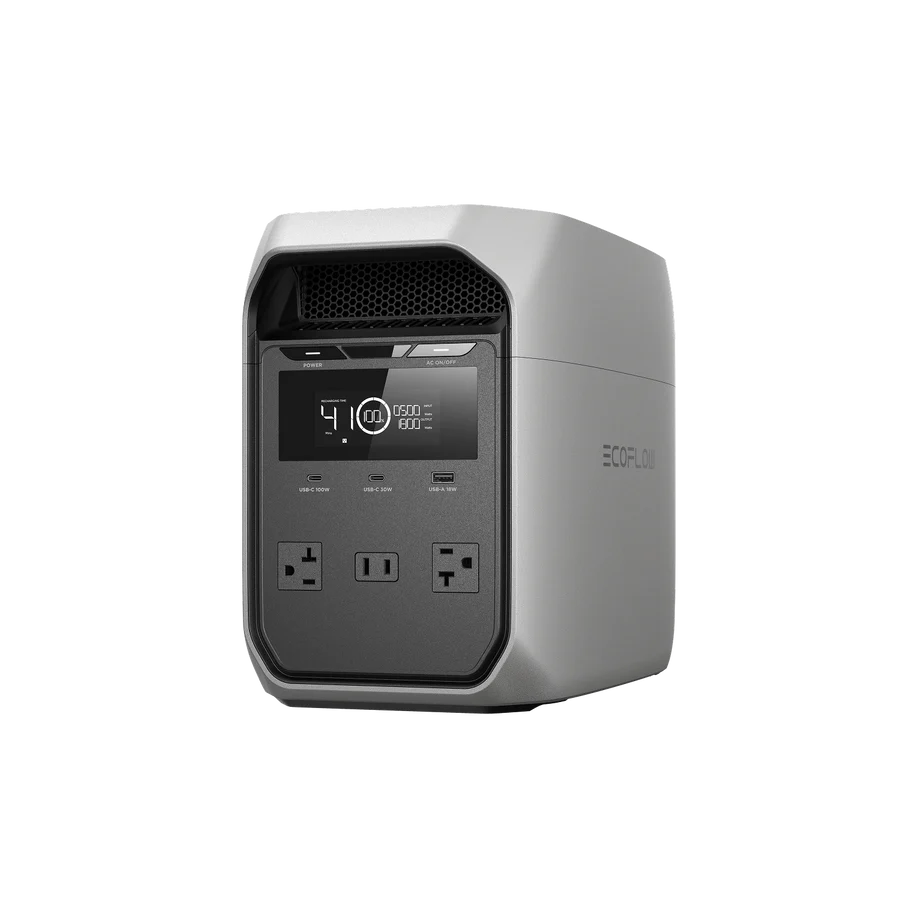
| EcoFlow DELTA 3 Classic | 1,024 Wh | 1,800 W (2,600 W X-Boost) | Short outage | EcoFlow Canada |
| Anker SOLIX C1000 Gen 2 | 1,024 Wh | 2,000 W (3,000 W peak) | Short outage + UPS | Amazon |
| BLUETTI Elite 200 V2 | 2,073.6 Wh | 2,600 W (3,900 W lifting) | Full day | Amazon |
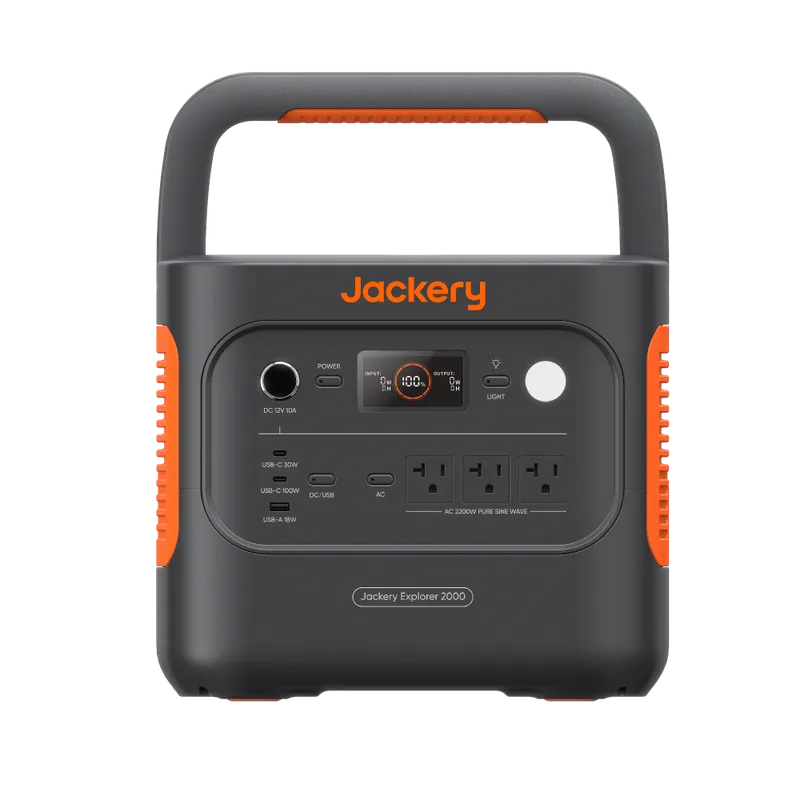
| Jackery Explorer 2000 v2 | 2,042 Wh | Not in our snapshot | Full day | Jackery Canada |
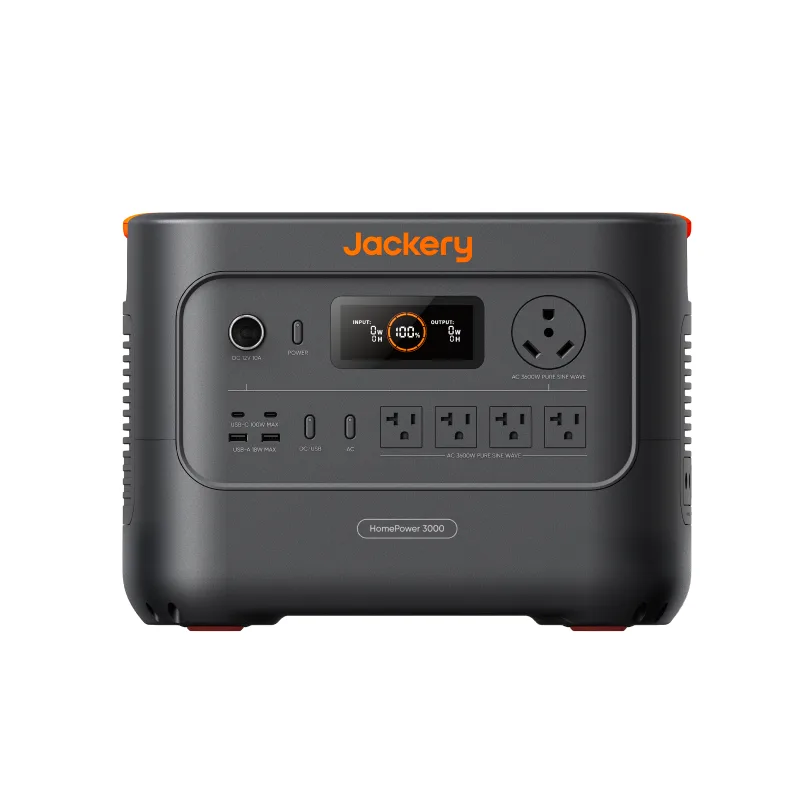
| Jackery HomePower 3000 | 3,072 Wh | Not in our snapshot | Extended outage | Jackery Canada |
Two cells read “not in our snapshot”: our Jackery catalogue records capacity but not AC output, and we would rather leave the cell honest than fill it from memory.
Which one for your outage
Anker SOLIX C300288 Wh · Portable · AmazonCamping, a work site, a laptop and phones through a short cut.Watch out: 288 Wh will not carry a fridge. Eight ports is its real selling point, not reserve.Check price ↗EcoFlow DELTA 3 Classic1,024 Wh · Short outage · EcoFlow CanadaA fridge, the router and lights through a few hours. Recharges 0 to 80 % in 45 minutes.Watch out: 1 kWh is a short outage, not an ice storm. We have a full review if you want the detail.Check price ↗Anker SOLIX C1000 Gen 21,024 Wh · Short outage + UPS · AmazonSame reserve as the DELTA 3 with more output, plus a UPS switchover under 10 ms for a CPAP or a desktop.Watch out: The 49-minute recharge needs 1,600 W input and has to be enabled in the app — it is not the default.Check price ↗BLUETTI Elite 200 V22,073.6 Wh · Full day · AmazonA fridge plus a freezer plus lights for a day. BLUETTI states 10 W standby draw and over 6,000 cycles.Watch out: Cycle-life and lifespan figures are the manufacturer's, measured on their own protocol. Nobody independent has run 6,000 cycles.Check price ↗Jackery Explorer 2000 v22,042 Wh · Full day · Jackery CanadaThe same 2 kWh class, if you would rather buy the station now and the solar panel later.Watch out: Our catalogue snapshot does not carry its AC output — check the listing before you commit to an appliance.Check price ↗Jackery HomePower 30003,072 Wh · Extended outage · Jackery CanadaBuilt for home backup: fridge, freezer and lights through an extended outage.Watch out: At this size, compare it against a standby generator before buying — the maths changes above 3 kWh.Check price ↗


What the American reviews leave out
- Outages here are measured in days. American round-ups are written around camping and a two-hour summer cut. An ice storm is a different problem, and it is the reason the 2 kWh and 3 kWh classes exist rather than being overkill.
- The charging temperature limit is a Canadian problem. A spec that never matters in California decides whether your unit is useful in an unheated garage in Quebec.
- Winter solar barely counts. Short days and a snow-covered panel mean the solar input figure that sells the unit in July is close to decorative in January.
- The direct stores undercut the marketplace here. Jackery, EcoFlow and BLUETTI all run Canadian storefronts with near-monthly promotions. Check both the week you buy — the same unit is regularly cheaper on the brand site.
Frequently asked questions
What size portable power station do I need?
Work backwards from the load and the hours. Capacity is measured in watt-hours: a 1,024 Wh unit holds about a kilowatt-hour before conversion losses. A fridge averaging roughly 150 W over its cycle therefore runs something like six hours on 1 kWh, and most of a day on 2 kWh. Decide how long your outages actually last, then buy that much reserve.
What is the difference between watts and watt-hours?
Watts are how much the unit can deliver at once — whether it can start your appliance at all. Watt-hours are how long it can keep delivering. A station with 2,000 W of output and 1,024 Wh of capacity runs a big appliance, briefly. Both numbers matter and they answer different questions.
Can a portable power station run a furnace?
The blower on a gas or oil furnace is usually within reach of a 1,800 to 2,600 W unit, but a furnace is hardwired — you cannot simply plug it in. Feeding a hardwired circuit safely needs a transfer switch installed by a licensed electrician. If whole-home backup is the goal, price a standby generator against the power station before deciding.
Do portable power stations work in the cold?
Check two temperature ranges on the spec sheet, not one: LiFePO4 cells discharge over a wider range than they can safely charge over, and charging a lithium pack below freezing damages it — which is why most units block it. In practice that means the unit lives inside and comes out to work, not the reverse. An unheated garage in January is the wrong home for it.
Is a power station better than a gas generator?
For indoor use it is not a comparison: a power station emits nothing, so it can sit in the kitchen, while a gas generator must stay outside and away from windows because of carbon monoxide. Gas wins on sustained output and on refuelling during a multi-day outage. Many households end up with a small station for the essentials and a generator for the long haul.
What is LiFePO4 and does it matter?
It is the battery chemistry most current stations use, and it matters because of cycle life: manufacturers rate LiFePO4 packs in thousands of charge cycles rather than hundreds. Treat the specific cycle numbers as manufacturer claims measured on their own protocol — no independent lab has run 6,000 cycles on a consumer unit — but the chemistry difference itself is real.
Can you charge a power station with solar panels?
Yes, and every brand here sells matching panels. The number to check is the unit's maximum solar input in watts: it caps how fast you can refill regardless of how many panels you connect. In a Canadian winter, short days and snow on the panel make solar a supplement, not the plan.
Where should I buy a portable power station in Canada?
Amazon.ca carries the widest mix of brands. Jackery, EcoFlow and BLUETTI also sell directly through their Canadian stores, where promotions run almost monthly — the direct store is often cheaper than the marketplace listing for the same unit. Check both the week you buy.
Keep reading
Brand by brand: the EcoFlow range, the Jackery range, and a full EcoFlow DELTA 3 review if the 1 kWh class is where you have landed. Getting the rest of the house ready for winter? Our guides to the best electric snow blowers and best basement dehumidifiers in Canada apply the same rule: read the spec that limits the machine, not the one on the box.