

Top choices
Specs as stated on the manufacturers' listings; the price shows on the retailer's page. Tightest budgetieGeek 2K wireless outdoor cameraThe least expensive battery camera of our picks when we checked. The listing gives 2K, colour night vision up to 33 ft, AI human detection, a siren with strobe and an IP65 rating.Watch out: No operating temperature on the listing. Card capacity tops out at 128 GB, and the camera is 2.4 GHz only.Check price on Amazon.ca ↗
 Solar · ladder out onceTapo C425 solar kitWhere the ladder comes out once. The panel ships in the box with a 13 ft cable, so the camera can sit under the soffit while the panel faces south. Person, vehicle and pet detection are listed as free.Watch out: Tapo states plainly that solar charging is optimized above 0 °C. From December to March, treat it as a battery camera that happens to have a panel.Check price on Amazon.ca ↗
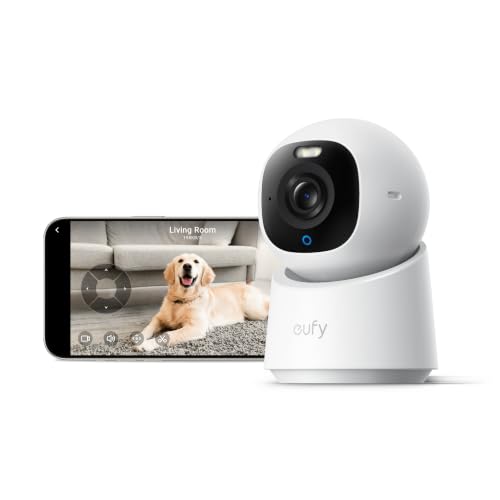
 Outdoor outlet · 24/7 recordingeufy Wired Cam C31The plug-in pick for anyone who already has a covered outdoor outlet. Continuous power means 24/7 recording, listed as IP66 for indoor or outdoor use, with no monthly fee and colour night vision without a spotlight.Watch out: 1080p, not 2K. The listing names HomeBase Mini and HomeBase 3 only, not HomeBase 2 or HomeKit. A new outdoor outlet is electrician work.Check price on Amazon.ca ↗
A security camera sold in Canada is the same hardware sold in Phoenix, with a listing written for Phoenix. The questions that decide whether it works on a porch in Winnipeg, a driveway in Halifax or a chalet north of Montréal are the ones the box leaves out: the operating temperature, whether the footage lives on a card you own or on a plan you rent, which Wi-Fi band it needs, and who is allowed to run the cable.
The short answer
- Most homes, no wires, no monthly fee: the Tapo C410. 2K, microSD up to 512 GB, −20 °C to 45 °C, all as listed.
- Tightest budget: the ieGeek 2K battery camera, with the caveat that it lists no operating temperature.
- You have an outdoor outlet: the eufy Wired Cam C31 for 24/7 recording with no plan.
- Wired perimeter, deep cold: the Lorex 4K PoE bullet, the only listing here with a −40 °C rating, on a Lorex recorder.
- Whole lot, no cables, weak Wi-Fi: the Blink Outdoor 4 XR four-camera system on its 900 MHz hub.
- Indoors: the eufy Indoor Cam E30, 4K on an SD card.
How we picked, and what we did not do: we have not mounted these cameras on our own walls through a winter. Every specification on this page is quoted from the manufacturer’s Amazon.ca listing, checked November 6, 2026, and every product on a card was in stock in Canada that day. Where a listing is silent on temperature, resolution or storage, the table says “not stated” rather than guessing. Links to Amazon are affiliate links; BranchéQC may earn a commission at no extra cost to you. We do not write prices by hand: the button says “Check price” and the Amazon page is what counts.
Four ways to power a security camera, and what each one commits you to
Before resolution, before the brand, decide how the camera gets electricity. That single choice sets the installation, the maintenance and the failure mode.
- Battery. Mount anywhere, no electrician, charge every few weeks to few months. The Tapo C410 lists up to 6 months per charge, the ieGeek 1 to 6 months, Blink up to two years on AA lithium cells. Those figures assume a quiet scene and mild weather; a busy driveway in January halves them.
- Plug-in. Continuous power, so continuous recording is possible: the eufy Wired Cam C31 lists 24/7 recording. The catch is the outlet. A covered exterior receptacle with a weatherproof in-use cover is a homeowner’s best friend here; adding one is electrician work.
- PoE (power over Ethernet). One network cable carries power and video to a switch, injector or recorder. The Reolink RLC-520A and the Lorex 4K bullet work this way. Nothing to charge, no Wi-Fi to drop, but a cable has to get from the camera to a recorder indoors.
- Solar. A battery camera with a panel. Tapo says what others imply: solar charging on the C425 kit is optimized for 0 °C to 45 °C, and the aosu D1 Classic listing states charging pauses below −5 °C. In most of Canada, a solar camera carries itself from April to October and runs on its battery the rest of the year.
Wireless security cameras: 2.4 GHz, 5 GHz and the hub alternative
“Wireless” on a listing can mean two different things. Wire-free is battery power plus Wi-Fi. Wireless often means Wi-Fi for the video and a cord for the power. The Ring Outdoor Cam Plus, for example, comes in a battery version and a plug-in version under nearly the same name. Read the power line before the resolution line.
Then the band. Of the eight picks, every outdoor battery and solar camera that states its band is 2.4 GHz only: Tapo C410, Tapo C425, ieGeek. That is not a cost-cutting flaw. 2.4 GHz travels farther and passes through brick, stucco and a frozen wall better than 5 GHz, and a camera on the far corner of the garage needs reach more than bandwidth. The practical consequences:
- If your router merges both bands under one network name, pairing can fail. Most routers let you split them or temporarily turn off 5 GHz during setup.
- Test the signal at the mounting spot with your phone, standing where the camera will hang, before you drill.
- For a detached garage or a lot with a long driveway, consider a hub system instead of Wi-Fi. Blink’s Sync Module XR talks to its cameras on 900 MHz, with a listed range of 1,000 ft in open air or 400 ft in typical use; only the hub needs your Wi-Fi.
Dual-band cameras exist and are worth it indoors or near the router: the Arlo Essential 2K two-pack lists dual-band Wi-Fi, and the eufy Wired Cam C31 lists dual external antennas for a steadier link at a distance.
Outdoor security cameras: weather ratings, mounting and the soffit
An IP rating tells you about dust and water, not cold. IP65 means protected against low-pressure jets, IP66 against powerful jets, IP67 against temporary immersion. All three handle rain and melting snow. What none of them tells you is what happens at −30 °C; for that you need an operating temperature, and the next section covers it.
Mount under the soffit or an eave whenever you can. It keeps direct snow and freezing rain off the lens, keeps the sun off the sensor in summer, and puts the camera above easy reach. Angle it slightly downward so meltwater drains off the housing instead of pooling on the lens. Cameras with a built-in spotlight (Tapo C410, eufy E30, Lorex) attract less frost on the lens than you might fear, but a spotlight bouncing off falling snow can also wash out the image and trigger motion alerts all night; most apps let you set the light to infrared only.
Pan-and-tilt mechanisms and cold. The eufy C31, the Tapo C425 and many solar cameras rotate. Ice in the joint stops them. If you rely on auto-tracking, choose a sheltered mount, or a fixed-lens camera with a wide field of view such as the Tapo C425 at a listed 150°.
Best outdoor security cameras without a subscription
The monthly plan is where a cheap camera becomes an expensive one. The question is simple: when motion is detected, where does the clip go?
| Where clips are stored | You pay | Examples on this page | Trade-off |
|---|---|---|---|
| microSD card in the camera | Card, once | Tapo C410, Tapo C425, eufy C31, Reolink RLC-520A, eufy E30 | A stolen camera takes its card with it |
| Hub or recorder in the house | Hub or NVR, once | Blink Sync Module XR (card sold separately), Lorex NVR, Reolink NVR | One more box; cable or hub range |
| Cloud plan | Monthly or yearly | Ring, Arlo, Blink smart detection | Clips survive theft; fee for the life of the camera |
Read the listings for what the plan unlocks. The Ring Outdoor Cam (Stick Up Cam) listing says that scrolling back to rewatch what you missed requires a Ring Protect subscription, sold separately. The Arlo Essential listing bundles a one-month trial and quotes a monthly plan price after it. Blink lists person detection as part of the optional plan, while local storage on the Sync Module XR needs only a card. Tapo, eufy, Reolink and Lorex state “no monthly fee” on the listings we checked, with cloud as an option, not a requirement.
A reasonable middle path for a house with one entrance that matters: local storage everywhere, and a cloud plan on the one camera a thief would grab first. The doorbell camera guide goes through the same choice at the front door.
Canadian winter: lithium below −20 °C and what the listings actually say
We read every listing for an operating temperature. Here is what we found, and only what we found.
| Camera | Operating range on the Amazon.ca listing |
|---|---|
| Lorex 4K PoE bullet | −40 °C to 60 °C (metal housing) |
| Tapo C410, Tapo C425 | −20 °C to 45 °C; solar charging 0 °C to 45 °C |
| Tapo C320WS (wired, linked below) | −20 °C to 45 °C |
| Blink Outdoor 4 | −20 °C to 45 °C on a Blink bundle listing, not on the XR kit listing |
| aosu D1 Classic (solar, linked below) | Solar charging pauses below −5 °C |
| ieGeek, eufy C31, Reolink RLC-520A, eufy E30 | Not stated |
Two patterns. First, −20 °C is the common floor for battery cameras, and a January night in Edmonton, Saguenay or Thunder Bay goes well below it. A lithium cell in that cold delivers less of its stored energy, charges poorly or not at all, and a camera that is also waking up for every gust of snow drains fast. Plan on recharging two to three times as often in the coldest weeks, or on a plug-in or PoE camera where it matters most.
Second, the cameras that state a deep-cold rating are the wired, metal-housed ones. Lorex’s −40 °C bullet has no battery to protect and a housing that sheds heat and frost differently than plastic. If the camera must work on the coldest night of the year, that is the category to shop in.
- Charge batteries indoors, at room temperature. Bring the pack in, not the charger out. Never charge a frozen cell.
- Narrow the detection zone to exclude the street and the trees. Fewer false wake-ups is the single biggest battery saver.
- Lower the clip length and the live-view habit. Each live view costs more than a dozen clips.
- Mount under the eave so snow does not sit on the lens, and brush the lens when you clear the steps.
- Expect downtime in a power outage. A battery camera keeps recording to its card, but your router is down, so no alerts. Our Hydro-Québec outage map shows what that looks like across the province.
Security camera systems: NVR, DVR, hub kits
A system means the footage lands in one box you own. Three families:
- PoE NVR. Network cameras on Ethernet, recorder with a hard drive. The Reolink RLC-520A and the Lorex 4K bullet are add-ons to this kind of recorder; Lorex sells the recorder and the cables separately, and its bullet is tied to the Lorex Classic app, not the newer Lorex Connect app. Best image quality per dollar, hardest installation.
- Analog DVR. Coaxial cameras, lower resolution, lowest cost for four or eight cameras. The Lorex 1080p 8-channel DVR with four dome cameras lists 24/7 recording to a built-in 128 GB card, expandable to a hard drive, with no monthly fee.
- Wireless hub kit. Battery cameras talking to a hub. Blink’s Outdoor 4 XR kit puts four cameras on a 900 MHz hub with a card slot; eufy’s HomeBase does the same job for its cameras. Easiest installation, batteries to manage.
Whatever the family, a recorder with a hard drive keeps recording when the internet is down, which is exactly when a cloud-only camera stops being a camera.
Indoor security cameras
Indoors, cold is not the problem; the household is. An indoor camera is for an empty house, a pet, a sleeping child or an aging parent, and it should be easy to switch off. Look for a physical privacy shutter or a privacy mode that turns the lens into the housing, local storage, and sound detection if you want to hear a smoke alarm from your phone.
The eufy Indoor Cam E30 on our list records 4K to an SD card with no fee and detects people, pets, sounds and crying on the device. For a budget pan-and-tilt indoor camera, the Tapo C210 lists 2K, 360° pan, baby-cry detection and microSD storage; its title says 256 GB and its bullets say 512 GB, so plan on 256 GB. Indoor cameras are usually 5 GHz capable or dual-band, since the router is close.
The eight picks, compared on published specs
Every figure is the manufacturer’s own. Where a listing gives no number, the table says so rather than guessing.
| Model | Power | Resolution | Storage (as listed) | Operating range | Wi-Fi |
|---|---|---|---|---|---|
| Tapo C410 2K battery camera | Battery, up to 6 months per charge (stated) | 2K 3MP | microSD up to 512 GB (not included) or optional cloud | −20 °C to 45 °C (listed) | 2.4 GHz only |
| ieGeek 2K wireless outdoor camera | Battery, 5,200 mAh, 1 to 6 months (stated) | 2K QHD | Memory card up to 128 GB or optional cloud | Not stated | 2.4 GHz only |
| Tapo C425 solar kit | Battery + included solar panel | 2K QHD, 150° field of view | microSD up to 512 GB (not included) or optional cloud | −20 °C to 45 °C (listed); solar charging optimized 0 °C to 45 °C | 2.4 GHz only |
| eufy Wired Cam C31 | Plug-in, continuous power | 1080p, 360° pan and tilt | microSD 32 to 256 GB (not included) or HomeBase Mini / HomeBase 3 | Not stated | Dual external antennas; band not stated |
| Reolink RLC-520A PoE dome | PoE: one network cable for power and video | 5MP, 2560 × 1920 | microSD (not included), Reolink NVR or FTP server | Not stated | None: wired Ethernet only |
| Lorex 4K PoE bullet, add-on (Classic app) | PoE add-on for a Lorex recorder | 4K, 8MP sensor | On the Lorex NVR (sold separately) | −40 °C cold rating, 60 °C heat rating (listed) | None: wired Ethernet only |
| Blink Outdoor 4 XR, 4-camera system | AA lithium batteries, up to two years (stated) | Not on this listing; Blink's other Outdoor 4 listings say 1080p | microSD up to 256 GB in the Sync Module XR (card sold separately) or cloud plan | Not on this listing; another Blink Outdoor 4 bundle lists −20 °C to 45 °C | Cameras talk to the hub on 900 MHz; the hub joins your Wi-Fi |
| eufy Indoor Cam E30 | Plug-in (USB adapter included) | 4K UHD | SD card (not included), no subscription fee; cloud optional | Indoor use | Not stated |
Which security camera for your house
Tapo C410 2K battery cameraBattery, up to 6 months per charge (stated) · 2K 3MPThe default for most Canadian homes: no outlet, no hub, no monthly fee. The listing states up to 6 months of battery per charge, person detection, colour night vision with spotlights up to 30 ft, and an operating range of −20 °C to 45 °C.Watch out: 2.4 GHz Wi-Fi only. Solar charging, if you add a panel, is listed as optimized for 0 °C to 45 °C, so count on recharging by hand in winter.Check price ↗ieGeek 2K wireless outdoor cameraBattery, 5,200 mAh, 1 to 6 months (stated) · 2K QHDThe least expensive battery camera of our picks when we checked. The listing gives 2K, colour night vision up to 33 ft, AI human detection, a siren with strobe and an IP65 rating.Watch out: No operating temperature on the listing. Card capacity tops out at 128 GB, and the camera is 2.4 GHz only.Check price ↗Tapo C425 solar kitBattery + included solar panel · 2K QHD, 150° field of viewWhere the ladder comes out once. The panel ships in the box with a 13 ft cable, so the camera can sit under the soffit while the panel faces south. Person, vehicle and pet detection are listed as free.Watch out: Tapo states plainly that solar charging is optimized above 0 °C. From December to March, treat it as a battery camera that happens to have a panel.Check price ↗eufy Wired Cam C31Plug-in, continuous power · 1080p, 360° pan and tiltThe plug-in pick for anyone who already has a covered outdoor outlet. Continuous power means 24/7 recording, listed as IP66 for indoor or outdoor use, with no monthly fee and colour night vision without a spotlight.Watch out: 1080p, not 2K. The listing names HomeBase Mini and HomeBase 3 only, not HomeBase 2 or HomeKit. A new outdoor outlet is electrician work.Check price ↗Reolink RLC-520A PoE domePoE: one network cable for power and video · 5MP, 2560 × 1920The entry into wired networking. One Cat5e or Cat6 cable carries power and video to a PoE switch, injector or Reolink NVR (none included). Person, vehicle and pet detection, 100 ft infrared, continuous or scheduled recording, all listed.Watch out: Not a Wi-Fi camera and, per the listing, not compatible with third-party recorders. The title says 512 GB cards, the bullet says 256 GB: plan on 256 GB.Check price ↗Lorex 4K PoE bullet, add-on (Classic app)PoE add-on for a Lorex recorder · 4K, 8MP sensorThe one listing on this page that states a −40 °C rating. All-metal IP67 housing, colour night vision, siren and warning lights, a programmable LED light band and two-way audio. Lorex is based in Markham, Ontario.Watch out: Needs a Lorex recorder on the Classic app, and the Cat5e or Cat6 cable is sold separately. Running that cable through an exterior wall is the installation question, not the camera.Check price ↗Blink Outdoor 4 XR, 4-camera systemAA lithium batteries, up to two years (stated) · Not on this listing; Blink's other Outdoor 4 listings say 1080pA whole-property wireless system in one box. Four cameras, a Sync Module XR and eight AA lithium batteries. The hub runs on 900 MHz with a stated range of 1,000 ft in open air or 400 ft in typical use, which is what makes it work on a rural lot or a detached garage.Watch out: Person detection is part of the optional Blink plan. The listing does not state the camera's resolution or its operating range; we quote them from Blink's other Outdoor 4 listings.Check price ↗eufy Indoor Cam E30Plug-in (USB adapter included) · 4K UHDThe indoor pick: 4K, on-device detection of people, pets, sounds and crying, auto tracking, a built-in spotlight for colour night vision, and HomeKit, Alexa and Google support, all without a monthly fee.Watch out: HomeKit is capped at 1080p, says the listing. An indoor camera watches your own household first: read the privacy section before you point one at a shared room.Check price ↗


Two more worth knowing. The Tapo C320WS is a wired 2K 4MP camera that lists −20 °C to 45 °C, IP66 and microSD up to 256 GB, a direct alternative to the eufy C31 if you prefer a fixed lens. The aosu D1 Classic is a solar pan-and-tilt camera with a fixed panel, 2.4 GHz only, that earns a mention for saying out loud that solar charging pauses below −5 °C.
Privacy in Canada: where a camera may look
A camera on your own house is lawful in every province when it watches your own property. The trouble starts at the lot line. Canadian privacy law treats a person’s home and yard as a place where they can reasonably expect not to be recorded, and several provinces give neighbours a civil claim against surveillance that reaches into their space. Federal privacy law (PIPEDA) is written for businesses, so a household camera is usually outside it, but a short-term rental or a home business brings it back in. The practical rules follow from that: frame the lens on your door, driveway and yard; use the app’s privacy zones to black out the neighbour’s windows and pool; keep the street to your own frontage; and tell anyone who lives in or regularly enters the house that cameras run. Audio deserves a separate caution. Recording a conversation you take part in is one thing; recording conversations between other people who do not know a microphone is on raises Criminal Code questions, so many owners turn audio recording off on street-facing cameras and keep two-way talk for the doorbell. If a neighbour complains, show them the field of view: a recorded clip with their yard blacked out settles most disputes.
Security camera installation: what you can do and when to call an electrician
The cameras on this page split cleanly into two installation worlds.
| Job | Who does it | Why |
|---|---|---|
| Battery camera on a bracket | You | Screws into trim or siding, no electricity involved |
| Plug-in camera into an existing outdoor outlet | You | Cord and a weatherproof in-use cover; nothing opened |
| New exterior 120 V outlet for a plug-in camera | Licensed electrician | Fixed wiring, a new circuit or extension, GFCI protection |
| Floodlight camera replacing a fixture | Licensed electrician | Hardwired to house wiring; in Quebec a homeowner may not do this at all |
| PoE camera: cable through an exterior wall to a recorder | Varies by province | Low-voltage network cabling; sealing the penetration matters as much as the rules |
| Recorder, switch, hub on a shelf | You | Plugs into an outlet; add a surge protector |
Battery and plug-in cameras are homeowner work everywhere in Canada. Mount, plug, pair. The only tool question is a masonry bit for brick.
Anything touching house wiring is a licensed electrician in every province. A new outdoor receptacle, a floodlight camera hardwired where a light fixture was, a transformer for a wired doorbell. In Quebec the line is drawn further than elsewhere: the homeowner is not permitted to replace even a switch or a receptacle, which is why our French guides send every one of those jobs to a licensed contractor. Ontario, Alberta and British Columbia allow some homeowner electrical work with a permit and inspection; a new exterior circuit is still a job most homeowners should not do themselves.
PoE cable is the grey zone. It carries low voltage, not line voltage, and the rules on who may run communications cabling through walls vary by province and sometimes by municipality. Beyond the rules, the hole through the wall is the real risk: a poorly sealed penetration on the north side of a house in Regina is a frost and moisture problem for years. If you are already paying an electrician for an outlet, have them run the Ethernet at the same time. When you need one, a request on BranchéQC reaches a licensed contractor in your region.
Finally, the recorder and the router both live on a shelf full of electronics. A surge protector between them and the wall is the least expensive insurance on the whole system.
If the camera is going on the garage, consider pairing it with a connected opener so the same app that shows the door can close it: our guide to the best smart garage door opener in Canada compares retrofit controllers and openers with a built-in camera.
If you already know the brand you want, we have one page per lineup, written the same way: eufy in Canada (HomeBase, SoloCam, doorbells and locks), Tapo cameras in Canada (TP-Link, C120 to C560WS), Reolink in Canada (PoE, NVR kits, Argus and 4G) and Blink cameras in Canada (Outdoor 4, Mini 2, Sync Module). This guide keeps the category decisions; those pages pick the model inside the brand.
Frequently asked questions
What are the best security cameras in Canada?
For most homes, a battery camera with local storage and no monthly fee: the Tapo C410 lists 2K, microSD up to 512 GB and an operating range of −20 °C to 45 °C. For a wired perimeter, the Lorex 4K PoE bullet lists a −40 °C cold rating. For a whole lot without wires, the Blink Outdoor 4 XR four-camera system.
What is the best outdoor security camera without a subscription?
Any camera that records to a microSD card or a recorder you own. On our list: Tapo C410 and C425 (microSD up to 512 GB), eufy Wired Cam C31 (32 to 256 GB), Reolink RLC-520A (microSD or Reolink NVR) and Lorex (NVR). Ring and Arlo listings tie clip history to a paid plan.
Do wireless security cameras work in Canadian winters?
Down to the operating temperature the manufacturer lists, and only if they list one. Tapo states −20 °C, Lorex states −40 °C for its metal-housed PoE bullet, and most battery cameras give no figure. Below −20 °C a lithium battery delivers less, so expect shorter runtime and more frequent charging.
Are wireless security cameras really wireless?
Wire-free means battery power and Wi-Fi. Wireless often means Wi-Fi for video but a power cord for electricity. A PoE camera is the opposite: one Ethernet cable carries both. Read which one the listing means before you buy.
Do I need an electrician to install a security camera?
Not for a battery or plug-in camera: mount it, plug it in, pair it. You do need a licensed electrician for a new outdoor outlet, a hardwired floodlight camera or anything connected to house wiring, in every province. Rules on running low-voltage network cable through walls vary by province.
Is it legal to have security cameras outside my house in Canada?
Yes, on your own property, aimed at your own property. Keep neighbours' windows, yards and the street beyond your frontage out of frame, be careful with audio, and tell household members and visitors. Provincial privacy law and the Criminal Code's rules on recording conversations apply.
What is the difference between a security camera system and individual cameras?
A system comes with a recorder or hub: a PoE NVR for Reolink or Lorex cameras, a DVR for analog cameras, or a Sync Module for Blink. Footage lands in one place with no monthly fee, and the recorder keeps working when the internet drops. Individual Wi-Fi cameras each save to their own card or to the cloud.
Should I buy a 2.4 GHz or 5 GHz security camera?
2.4 GHz travels farther and through walls better, which is why most outdoor and battery cameras on Amazon.ca are 2.4 GHz only. 5 GHz carries more data over a shorter distance, useful indoors. Dual-band cameras such as the Arlo Essential pick whichever is stronger.
Keep reading
The front door first: our guide to the best doorbell cameras in Canada covers wired transformers, battery doorbells and the same subscription question. Pair it with the best smart locks in Canada.
For the rest of the house, a smart plug can power-cycle a stubborn camera or recorder from your phone, and the smart thermostat guide explains what else your Wi-Fi is already carrying.