
Best Home EV Charger in Canada (2026)
Specs checked November 4, 2026 · Version française
Most Level 2 chargers sold in Canada do the same basic job well. The ones that disappoint are almost always the wrong match: more amps than the car can take, a plug-in unit on an outlet that was never meant for eight hours of load a night, a NACS cable on a J1772 car, or a cable that turns into a steel rod at −30 °C. Four questions sort it out before you look at a single product page: what your car accepts, what your panel can spare, where the charger will hang, and which port your car has.
The short answer
- Most non-Tesla cars, hardwired: a J1772 charger set to 40 A on a 50 A circuit, rated for −40 °C, with a 25 ft cable.
- A Tesla or another NACS car: the same thing with a native NACS connector, and no adapter to lose.
- You already have a 14-50 outlet: a 40 A plug-in unit. That is the ceiling for a plug-in setup.
- Your car accepts 48 A: a hardwired 48 A unit on a 60 A circuit, if the panel has room.
How we picked, and what we did not do: we have not bench-tested these chargers. Every specification on this page is quoted from the manufacturer’s own Amazon.ca listing, checked November 4, 2026, and every unit on a card was in stock in Canada that day. Two chargers from our French guide were showing limited stock and are left out. Where a listing contradicts itself or leaves a spec out, we say so. Links to Amazon are affiliate links; BranchéQC may earn a commission at no extra cost to you. We do not publish prices by hand; the button says “Check price” and the Amazon page is what counts.
What a Level 2 charger is, and what it is not
Level 1 is the cord that came with the car, plugged into an ordinary 120 V household outlet: fine for a plug-in hybrid, slow for a full battery EV. Level 2 runs on 240 V, the same voltage as a dryer or a range, and is what nearly every EV owner ends up installing at home. DC fast charging is the highway kind, not something you install at home.
One thing surprises most first-time buyers: the charger in your garage is not really the charger. It is a smart, safe switch with a cable. The part that converts power for the battery is the onboard charger inside the car, and it sets the speed limit. A charger rated above what the car accepts charges at exactly the car’s speed, no faster.
Amps: match the car first, then the breaker
Start with the owner’s manual or the spec sheet for your exact trim, and look for the onboard charger rating in kilowatts or amps. The table in our French guide gives some examples: plug-in hybrids like the Prius Prime and RAV4 Prime accept 16 A, a Chevrolet Bolt 32 A, a Hyundai IONIQ 5 or 6, a Kia EV6 or a Mustang Mach-E 48 A. Model years and trims differ, so check yours.
Then the circuit. A charger draws its full current for hours, so the electrical code treats it as a continuous load and the breaker is sized at 125 percent of the charger’s output. Grizzl-E publishes the ratios right in its listing, and the 48 A row follows the same rule. The power column is simply amps multiplied by 240 V, rounded.
| Charger output | Breaker | Power at 240 V | Suits |
|---|---|---|---|
| 16 A | 20 A | 3.8 kW | Plug-in hybrids with a 16 A onboard charger |
| 24 A | 30 A | 5.8 kW | A tight panel with little spare capacity |
| 32 A | 40 A | 7.7 kW | Cars that accept 32 A |
| 40 A | 50 A | 9.6 kW | Most homes; the limit of a NEMA 14-50 plug-in |
| 48 A | 60 A | 11.5 kW | Cars that accept 48 A, hardwired only |
Two consequences. A 40 A charger is the sensible ceiling for most homes, because it covers most cars and stays on a 50 A circuit. And several chargers here can be turned down: the FLO X3 output is configured by the electrician at installation, while the Grizzl-E Classic, the Classic Connect and the DEWALT have selectable settings. Buying a charger with headroom is fine; installing a circuit the panel cannot carry is not. FLO advertises up to 50 A, but at that setting the circuit has to be larger than 60 A under the same rule.
Hardwired or NEMA 14-50 plug-in
A plug-in charger goes into a NEMA 14-50 outlet, the four-prong 240 V receptacle on a 50 A circuit. Its advantages are real: you can take it with you when you move, unplug it to replace it, and use the same outlet for a portable cord at a cottage. Its limit is just as real: a 14-50 sits on a 50 A circuit, so a plug-in charger stops at 40 A.
The other issue is the outlet itself. A range or a dryer pulls heavy current for minutes; a car pulls it for hours, every night, for years. A low-grade receptacle can overheat at the contacts over time, which is why our French guide on the subject recommends an industrial-grade or EV-rated receptacle. Leviton sells one, the Leviton 1450R EV charging receptacle, which its listing describes as designed specifically for plug-in EV charging. The electrician installs it, not you.
A hardwired charger connects straight to the circuit with no outlet in between. Nothing to wear out, nothing to work loose, and the only way above 40 A. If the charger is staying where it is and you have no plans to carry it anywhere, hardwiring is the cleaner installation, and FLO’s NACS chargers come no other way.
NACS or J1772 in 2026
For years, every non-Tesla EV in North America used the J1772 connector and Tesla used its own. That Tesla connector is now called NACS, and a growing number of other models ship with a NACS port as well. The FLO listings put it plainly: Tesla and other NACS-equipped EVs. The rule is simple: look at the port on your car, not at the badge.
Adapters work in both directions, and our guide to Tesla, J1772 and NACS adapters in Canada covers which ones carry a proper rating. For the charger you use every night, a native connector is still better: one less part to drop in a snowbank or leave in another driveway.
Cable length, cold and outdoor ratings
Cable length is the spec people regret. Measure from where the charger will hang to the charge port, with the car parked the way you actually park it, and then add slack for the other car or for backing in. Every charger on this page has a 24 or 25 ft cable.
Cold matters in two ways. The electronics need a rated operating range, and the FLO listings state −40 °C to 50 °C. The cable needs to stay flexible, because a stiff cable at −30 °C is hard to coil and hard on the connector. FLO says its cable stays manageable in extreme cold. The Grizzl-E listings call the units suitable for cold weather but give no temperature range, so we do not invent one.
Outdoor ratings come in two systems. NEMA Type 4 means protection from rain, snow, hose-directed water and ice formation; 4X adds corrosion resistance, which matters near the sea or near road salt spray in a driveway. IP67 and IP66 are the international equivalents for dust and water. Every unit on this page carries one.
Wi-Fi or a simple charger
A charger with no app is not a lesser charger. It charges at the same speed, and most cars can schedule charging from their own settings. Grizzl-E even notes that its Connect model charges with or without an online connection, which is how it should be.
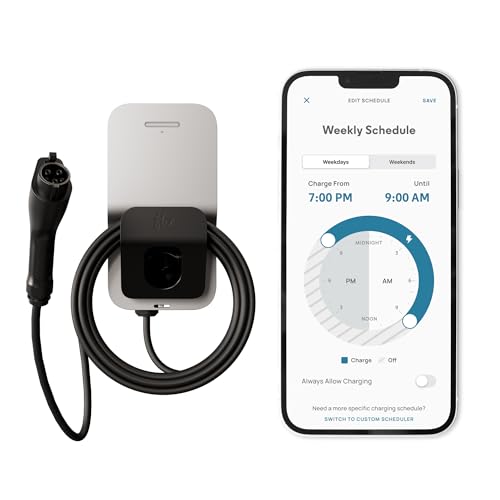
Wi-Fi earns its place in three cases. On a time-based rate such as Hydro-Québec’s Flex D, where electricity costs far more during winter peak events, a connected charger can pause on its own. When two cars share one charger, or two compatible chargers share one circuit, which is what FLO’s power sharing on the X6 is for. And when you want to see exactly how many kilowatt-hours went into the car.
Certification: what to look for on the label
Electrical equipment installed in Canada has to carry a Canadian approval mark. The ones you will see are CSA, cUL and cETL; the small “c” is the Canadian part. A plain UL mark is the American listing. Listings are not always precise: Grizzl-E’s says UL tested and certified, DEWALT’s says CSA certified, and FLO’s listings name no mark at all. Look at the label on the unit, or ask the seller, and your electrician will check it too.
This matters most on cheap portable chargers. Several low-cost portable units on Amazon.ca list FCC compliance, which covers radio interference and is not a safety listing, or no mark at all. That is why the portable pick below is the DEWALT, whose listing states CSA certification.
The seven chargers, compared on listed specs
Every figure is the manufacturer’s own, from the Amazon.ca listing. Where a listing gives two answers or none, the table says so.
| Model | Connector | Install | Max output | Cable | Enclosure | Smart | Warranty |
|---|---|---|---|---|---|---|---|
| Grizzl-E Classic 40 A, NEMA 14-50 | Not named in the listing | NEMA 14-50 plug-in | 40, 32, 24 or 16 A | 24 ft | NEMA 4 metal, IP67 | None listed | 3 years |
| Grizzl-E Classic Connect 40 A, Wi-Fi | J1772 | NEMA 14-50 plug-in | 16 to 40 A (9.6 kW) | 25 ft | Metal, NEMA 4 (one bullet says 4X) | Wi-Fi, works offline too | 3 years |
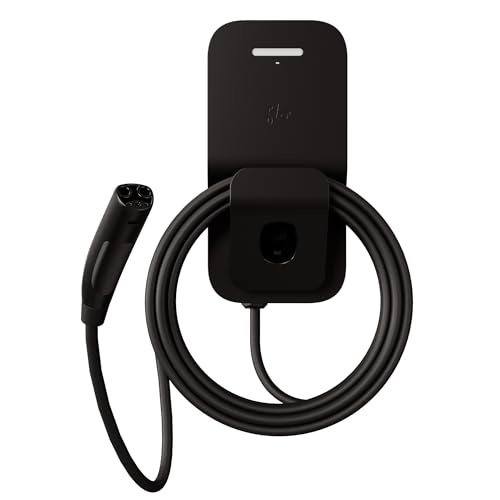
| FLO Home X3, J1772, hardwired | J1772 | Hardwired | Up to 50 A (12 kW) | 25 ft, stays flexible in cold | Type 4X, −40 °C to 50 °C | Wi-Fi, FLO app | 3 years |
| FLO Home X3, NACS, hardwired | NACS | Hardwired only | Up to 50 A (12 kW) | 25 ft, stays flexible in cold | Type 4X, −40 °C to 50 °C | Wi-Fi, FLO app | 3 years |
| Grizzl-E Ultimate 48 A, hardwired | J1772 | Hardwired only (kit included) | 48 A (11.5 kW) | 25 ft | UL Type 4 cast aluminium | OCPP, choice of app | 3 years |
| FLO Home X6, J1772, NEMA 14-50 | J1772 | NEMA 14-50 plug-in (see note) | 40 A (9.6 kW) per the bullets | 25 ft, field-replaceable | Aluminium Type 4X, −40 °C to 50 °C | Wi-Fi, power sharing | 5 years |
| DEWALT portable Level 2, 32 A | J1772 | Portable, NEMA 14-50 and 5-15 adapters | 12 to 32 A (7.6 kW) | 25 ft | NEMA 4X, IP66 | LCD screen, no Wi-Fi listed | 3 years |
Which one for your driveway
Grizzl-E Classic 40 A, NEMA 14-50Not named in the listing · NEMA 14-50 plug-in · 40, 32, 24 or 16 AThe simple charger: plug it in, set the amps to your circuit, charge overnight. Made in Canada and UL certified, according to the listing.Watch out: The listing never names the connector; the Classic Connect sibling states J1772. Confirm before ordering if your car has a NACS port. No operating temperature range is given.Check price ↗Grizzl-E Classic Connect 40 A, Wi-FiJ1772 · NEMA 14-50 plug-in · 16 to 40 A (9.6 kW)The default plug-in choice: the same Canadian-made metal box with schedules, energy statistics and diagnostics in an app. Energy Star and UL according to the listing.Watch out: Advanced OCPP features carry a one-time activation fee. The listing calls the enclosure NEMA 4 in one bullet and NEMA 4X in another.Check price ↗FLO Home X3, J1772, hardwiredJ1772 · Hardwired · Up to 50 A (12 kW)The default hardwired charger for most non-Tesla cars, from a Quebec company, with the stated −40 °C rating and a cable built to stay manageable in extreme cold.Watch out: A NACS car needs an adapter. The listing names no certification mark; check the label. Full 50 A output needs a circuit larger than 60 A.Check price ↗FLO Home X3, NACS, hardwiredNACS · Hardwired only · Up to 50 A (12 kW)A Tesla, or any car with a NACS port, without an adapter. FLO states an average of 63 km of range added per hour at the full 50 A setting.Watch out: FLO states that NACS is not offered in a plug-in configuration, so this one always needs an electrician and a dedicated circuit.Check price ↗Grizzl-E Ultimate 48 A, hardwiredJ1772 · Hardwired only (kit included) · 48 A (11.5 kW)A car whose onboard charger accepts 48 A, on a panel with room for a 60 A circuit. Made in Canada, UL and Energy Star according to the listing.Watch out: Only worth it if your car actually accepts 48 A. No operating temperature range in the listing.Check price ↗FLO Home X6, J1772, NEMA 14-50J1772 · NEMA 14-50 plug-in (see note) · 40 A (9.6 kW) per the bulletsThe premium plug-in: the longest warranty here, a cable you can replace without replacing the charger, and power sharing between compatible FLO units.Watch out: The listing contradicts itself: the title says hardwired and up to 50 A, the bullets say NEMA 14-50 plug-in and 40 A. A 14-50 plug-in cannot exceed 40 A, so trust the bullets.Check price ↗DEWALT portable Level 2, 32 AJ1772 · Portable, NEMA 14-50 and 5-15 adapters · 12 to 32 A (7.6 kW)A charger that travels: the cottage, a rental, a second home with an existing 14-50 outlet. CSA certified according to the listing.Watch out: 32 A is the ceiling. On a household 5-15 outlet it is a Level 1 charger, and much slower.Check price ↗




What the American reviews leave out
- Kilometres, not miles. Most listings quote range added per hour in miles, because they were written for the American market. FLO’s NACS listing is the exception, at 63 km per hour at 50 A. Treat all of these figures as rough, since they depend on the car.
- The Canadian mark. American reviews check for UL. Here, look for CSA, cUL or cETL on the label.
- The cable in January. A charger tested in a mild climate tells you nothing about a cable coiled outside at −30 °C. Look for a stated temperature range and a cable sold as cold-flexible.
- Canadian brands. FLO is a Quebec company, and the Grizzl-E listings state the chargers are made in Canada. Both are easy to find on Amazon.ca, and both are rarely ranked by American round-ups.
- Quebec’s Écorecharge rebate. The provincial program offers $600 toward the charger. The charger must appear on the official Écorecharge list and cost at least $600 before taxes. A listed charger bought for less does not qualify, and the exact model counts, not the brand. A NEMA 14-50 outlet on its own is not eligible. Check the list and the price on the day you buy.
Installation: a licensed electrician and a permit
Whatever you choose, the new 240 V circuit is permitted electrical work, and in most cases that means a licensed electrician. Rules differ by province, so check with your provincial or local electrical safety authority before you assume anything. A good electrician starts with a load calculation: how much the panel already carries, and how much it can spare for a car that will draw power for hours every night.
In Quebec, the work is done by a licensed master electrician, who takes out the permit and declares the work. For what an installation costs in Montreal and across Quebec, and how the rebate fits into the total, see our EV charger installation guide.
Get a quote from a licensed master electrician in Quebec: tell us your car, your panel and where you park, and one installer near you gets back to you.Request my quote →Where to buy in Canada
| Where | Strength | Note |
|---|---|---|
| Amazon.ca | FLO, Grizzl-E, DEWALT and others in one place | Check the connector and the install type on the exact listing |
| The brand's own store | FLO, Tesla and ChargePoint sell direct | Easiest for warranty questions |
| Home Depot, Canadian Tire | Grizzl-E and other models, depending on the season | Returns in store |
| Through your electrician | Compatibility with your panel is their responsibility | Often costs a bit more than buying the unit yourself |
Frequently asked questions
What is the best home EV charger in Canada?
There is no single best one, because the right charger depends on your car's port and onboard charger, your panel and where you park. For most non-Tesla cars on a hardwired circuit, a J1772 unit rated for −40 °C such as the FLO Home X3 is the safe default. For a Tesla, the same charger in its NACS version. For a plug-in setup on a 14-50 outlet, a 40 A unit like the Grizzl-E Classic Connect.
What size breaker do I need for a Level 2 charger?
A charger runs for hours at a time, so the circuit is sized at 125 percent of the charger's output. Grizzl-E's own listing gives the ratios: 40 A of output on a 50 A breaker, 32 A on 40 A, 24 A on 30 A, 16 A on 20 A. A 48 A charger needs a 60 A circuit. Your electrician confirms what the panel can spare with a load calculation.
Is a NEMA 14-50 plug-in charger safe for daily charging?
It can be, when the outlet is installed by a licensed electrician on a dedicated 50 A circuit and is a heavy-duty receptacle meant for the job. Hours of continuous load every night is harder on an outlet than a stove or a dryer ever is, and a cheap receptacle can overheat at the contacts over time. That is why many installers prefer to hardwire.
Is the Grizzl-E made in Canada?
The Amazon.ca listings for the Grizzl-E Classic, the Classic Connect and the Ultimate 48 A all state that the charger is made in Canada. We quote the listings; we have not visited a factory.
Should I buy a J1772 or a NACS charger in 2026?
Buy the connector that matches the port on the car you will charge most. Teslas use NACS, as do a growing number of other models, while many EVs on the road still use J1772. Adapters exist in both directions, but a native connector removes one more part to lose in a snowbank. FLO sells the X3 in both versions.
Can I install a Level 2 charger myself?
A Level 2 charger needs a new 240 V circuit from the panel, and that is permitted electrical work. Rules differ by province, so check with your local electrical safety authority. In Quebec, the work is done by a licensed master electrician who handles the permit and the declaration of work. Even a plug-in charger needs its outlet installed that way.
Keep reading
Ready to have it installed? Our EV charger installation guide covers costs, timelines and the rebate. Charging a Tesla on a J1772 unit, or the reverse? Start with Tesla, J1772 and NACS adapters. And for the electronics on the other side of the garage wall, our guide to the best surge protectors in Canada explains what a power strip can and cannot protect.