
Tesla, J1772 and NACS Adapters in Canada (2026): Which One Your Car Needs
Specs checked November 4, 2026 · Version française
Almost every mistake with an EV adapter is a mistake of direction. Sellers title the same product “Tesla to J1772” whether it lets a Tesla use a public station or lets a Hyundai use a Tesla charger, and those two adapters do not fit each other’s job. The rule that sorts it out: the first connector named is the station’s, the second is the car’s. Read every listing that way and the rest of this page is detail.
The short answer
- Tesla at a public Level 2 station: J1772 to NACS. Check the glovebox first, Tesla long included one.
- J1772 car at a Tesla Wall Connector or destination charger: NACS to J1772.
- Tesla at a CCS fast charger: CCS1 to NACS, if your car shows CCS adapter support as enabled.
- CCS1 car at a Tesla Supercharger: NACS to CCS1, only if your automaker has access. Check your manual for an approved adapter.
How we picked, and what we did not do: we have not bench-tested these adapters. Every rating and certification on this page is quoted from the seller’s own Amazon.ca listing, checked November 4, 2026, and every adapter was in stock in Canada that day. Where a listing contradicts itself or names no certification, we say so. Links to Amazon are affiliate links; BranchéQC may earn a commission at no extra cost to you. We do not publish prices by hand, so the button says “Check price” and the Amazon page is what counts.
Which adapter for your car: the four directions
Find your line. The right-hand column is the adapter to buy, written the way listings write it: station side first, car side second.
| Your car (port) | You want to plug into | Current | Adapter to buy |
|---|---|---|---|
| Tesla (NACS) | Public Level 2 station (FLO, Circuit électrique, ChargePoint) or a J1772 home charger | AC | J1772 to NACS |
| Other recent car with a NACS port | J1772 Level 2 station | AC | J1772 to NACS (often supplied with the car) |
| J1772 car (Hyundai, Kia, Nissan, VW, Chevrolet and others) | Tesla Wall Connector or Tesla destination charger | AC | NACS to J1772 |
| Tesla (NACS) | CCS fast charger (Circuit électrique, FLO, Electrify Canada) | DC | CCS1 to NACS (Tesla sells its own) |
| CCS1 car with Supercharger access | Tesla Supercharger | DC | NACS to CCS1 |
| Tesla at a Supercharger, or J1772 car at a J1772 station | Direct plug | Either | None |
One test before you pay: a J1772 to NACS adapter has a socket that accepts a J1772 handle and a plug shaped for a Tesla port. If your car has a J1772 port, that plug will not go in, and no amount of pushing changes it. The reverse is just as true.
J1772, NACS and CCS1 in one minute
J1772 is the alternating-current connector for Level 1 and Level 2 charging, used since 2010 by most non-Tesla EVs in North America. Public Level 2 stations from FLO, Circuit électrique and ChargePoint use it, as do most home chargers. The standard goes up to 80 A, and most public Level 2 stations deliver around 7 kW.
NACS is Tesla’s connector, on every North American Tesla since the 2012 Model S. Tesla opened it to the industry in 2022 under the NACS name, and SAE International standardized it as J3400, which is why some listings say J3400 instead. One NACS port handles both Level 2 and fast charging. Other automakers are moving to it: the Hyundai IONIQ 5 has had a NACS port since the 2025 model year.
CCS1 is the direct-current fast-charging connector of non-Tesla cars: a J1772 with two large pins added underneath. The fast chargers of Circuit électrique, FLO and Electrify Canada use it. None of these shapes fits another.
AC and DC adapters are different products
A Level 2 adapter carries alternating current at tens of amps, and the car’s onboard charger turns it into direct current for the battery. A fast-charging adapter carries direct current straight to the battery at hundreds of amps, bypassing the onboard charger. Neither kind can stand in for the other.
So a NACS to J1772 adapter never works at a Supercharger, which delivers only direct current, and a J1772 to NACS adapter never works at a CCS fast charger. The Lectron and Teviem NACS to J1772 listings both say so in plain words. Road-trip fast charging means the CCS1 to NACS or NACS to CCS1 aisle, a different product at a different price.
A few adapters combine both: the Teviem 2-in-1 below has a J1772 side for AC and a CCS1 side for DC, for a Tesla. A similar HIONIBEAR 2-in-1 was left out because its listing contradicts itself: the title promises 80 A AC charging, and a bullet says it is not compatible with AC charging.
Amp rating, and the onboard charger that caps it
An adapter is passive: it does not raise voltage or add power, and the car and the station negotiate the current. Its rating sets how much it can carry without overheating, so buy one rated at least as high as the station. A 48 A adapter covers almost every public Level 2 station; an 80 A adapter covers everything the J1772 standard allows.
The other ceiling is your car’s onboard charger. A 48 A Tesla Wall Connector will not charge a car faster than a public station if that onboard charger accepts less. For scale, simple arithmetic: 48 A at 240 V is about 11.5 kW and 80 A at 240 V about 19.2 kW, against roughly 7 kW at most public Level 2 stations. An 80 A adapter only buys speed if both station and car can use it; it always buys headroom.
UL 2252, CSA and what the listing actually says
UL 2252 is the North American standard for EV charging adapters, and the mark to look for, above all on a fast-charging adapter. We report each listing as written. Below, the Lectron NACS to J1772 and the LENZ NACS to CCS1 name UL 2252, and the A2Z EV Stellar Plug names UL 2252 and CSA C22.2, the Canadian mark. The other four name no certification in the listing text we checked. That does not prove they are unsafe; it means the seller has not told you.
Superchargers: check your automaker before the adapter
Tesla is opening its Superchargers to other brands one automaker at a time. If yours has access, a CCS1 car can charge there with a NACS to CCS1 adapter. Three checks, in order:
- Access. The Tesla app shows which Superchargers accept your brand, and it is where you pay.
- Your manual. Several automakers sell or supply their own official adapter, and some manuals allow only that one. Check your manufacturer before buying a third-party unit.
- Certification. For direct current at these levels, insist on a stated certification.
For a Tesla going the other way, to a CCS fast charger, the check is in the car: the vehicle information screen shows whether CCS adapter support is enabled. Tesla sells its own CCS1 adapter, and for fast charging that is the one we would look at first.
The seven adapters, compared on listed specs
Every figure below is the seller’s own, from the Amazon.ca listing. Where a listing gives two values or none, the table says so.
| Adapter | Direction | Current | Listed rating | Certification |
|---|---|---|---|---|
| HIONIBEAR J1772 to NACS, 80 A | J1772 to NACS | AC only (Level 1 and 2) | 80 A, 110 to 250 V | None named in the listing |
| Teviem 2-in-1 J1772 and CCS1 to NACS | J1772 and CCS1 to NACS | AC and DC | 80 A AC, 250 kW DC | None named in the listing |
| Teviem NACS to J1772, 60 A | NACS to J1772 | AC only | 60 A (title says 250 V, bullets say 240 V) | None named; IP65 stated |
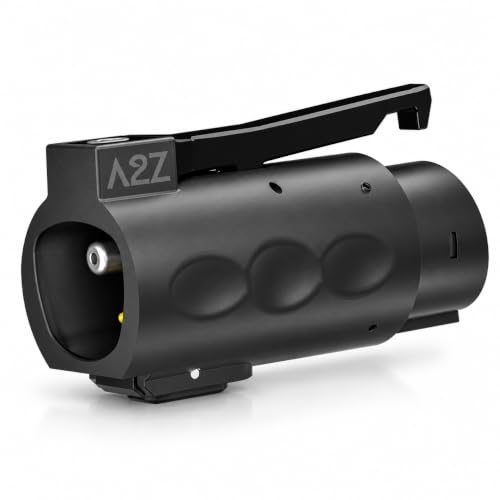
| A2Z EV Stellar Plug, NACS to J1772 | NACS to J1772 | AC only | Listed for 40, 48 and 80 A Tesla stations | UL 2252 and CSA C22.2 (title) |
| Lectron NACS to J1772, 80 A | NACS to J1772 | AC only | 80 A, 240 V | UL 2252; IP67 stated |
| LENZ NACS to CCS1, 500 A | NACS to CCS1 | DC fast only | 500 A, 1,000 V, up to 250 kW | UL 2252, IP67 (title) |
| Lectron Vortex NACS to CCS1, 500 A | NACS to CCS1 | DC fast only | 500 A, 1,000 V | None named in the bullets |
Which one to buy
HIONIBEAR J1772 to NACS, 80 AJ1772 to NACS · AC only (Level 1 and 2)A Tesla, or another NACS-port car, at public Level 2 stations and J1772 home chargers. Listed for use from -30 °C to 50 °C.Watch out: No fast charging at all. The listing names no safety certification, so if that matters to you, compare it with the next pick.Check price ↗Teviem 2-in-1 J1772 and CCS1 to NACSJ1772 and CCS1 to NACS · AC and DCA Tesla owner who wants one adapter in the trunk for both Level 2 stations and CCS fast chargers.Watch out: Tesla sells its own CCS1 adapter, and for fast charging that is the one to consider first. Check in your Tesla's vehicle information that CCS adapter support is enabled before buying any of them.Check price ↗Teviem NACS to J1772, 60 ANACS to J1772 · AC onlyThe budget way to plug a J1772 car into a Tesla Wall Connector, a destination charger or a Tesla Mobile Connector.Watch out: 60 A covers a 48 A station, not one set to 80 A. The listing states no certification and gives two different voltages.Check price ↗A2Z EV Stellar Plug, NACS to J1772NACS to J1772 · AC onlyA J1772 car owner who wants a Canadian CSA mark named on the box, not only a U.S. one.Watch out: The listing is short and gives no temperature range or water rating. It states the car locks the adapter into the charge port while charging.Check price ↗Lectron NACS to J1772, 80 ANACS to J1772 · AC onlyRegular use on a Tesla Wall Connector or destination charger set to its maximum, with built-in temperature monitoring per the listing.Watch out: The priciest Level 2 adapter here. Like every NACS to J1772 adapter, it does nothing at a Supercharger.Check price ↗LENZ NACS to CCS1, 500 ANACS to CCS1 · DC fast onlyA CCS1 car whose automaker has Supercharger access. Listed from -22 °F to 122 °F, with a travel case.Watch out: Useless unless your brand has access, and your owner's manual may require the automaker's own adapter. Check both first.Check price ↗Lectron Vortex NACS to CCS1, 500 ANACS to CCS1 · DC fast onlySame job as the LENZ, from a brand that states locking mechanisms on both sides and use at V3 and V4 Superchargers.Watch out: The title itself says to check with your automaker for compatibility. Unlike the LENZ, the listing does not name a certification.Check price ↗




Locking, theft and what damages an adapter
The real risk is heat where the pins meet, from an adapter that is undersized, badly made or damaged. A 32 A adapter on a 48 A station will run hot. Replace one with blackened pins, warped plastic or a burnt smell. Never chain two adapters or add an extension cord between station and car.
The latch must hold firmly in the station handle and in the car. A2Z EV states that the car locks its adapter into the port while charging, and Lectron states locking mechanisms on both sides of the Vortex. Still, never leave an adapter on a public station: it leaves with you, every time. If charging will not start, unplug everything, connect the adapter to the station handle first, then to the car. If it fails at several stations, suspect the adapter.
What the American reviews leave out
- The adapter lives in a frozen trunk. American round-ups rarely list an operating range. Ours do where the listing gives one: HIONIBEAR states -30 °C, LENZ states -22 °F. Pick a model whose listing names a range rather than one that is silent.
- Ice in the latch. Snow packs into a charge port and freezing rain glazes the pins. Clear both before plugging in, and never force a latch that will not close; a forced latch is how a pin gets bent.
- The Canadian networks. Circuit électrique, FLO, ChargePoint and Electrify Canada run J1772 at Level 2 and CCS1 at fast chargers, which is why Tesla owners here buy a J1772 to NACS adapter first.
- A Canadian mark exists. CSA C22.2 is named on one listing here, a detail no American review checks.
At home: you probably do not need an adapter
At home, buy a charger with your car’s connector built in: a Tesla Wall Connector or a NACS-equipped station for a NACS car, and any mainstream home charger (FLO, ChargePoint, Grizzl-E, Wallbox) for a J1772 car. If you expect to change cars soon, one charger plus a good adapter is an acceptable bridge.
A hardwired Level 2 charger is a job for a licensed electrician. In Quebec, get a quote from a licensed master electrician through BranchéQC; the service covers Quebec only.
Where to buy in Canada
| Where | Strength | Note |
|---|---|---|
| Amazon.ca | Widest range of third-party adapters in all four directions | Read the direction and the certification line on every listing |
| Tesla | Its own CCS1 adapter for Tesla fast charging | Check CCS adapter support in your car first |
| Your automaker or dealer | Official NACS to CCS1 adapter where one is offered | The safe choice if your manual names a specific adapter |
Frequently asked questions
Which adapter do I need to charge a Tesla at a J1772 station?
A J1772 to NACS adapter. It slips over the station's J1772 handle and plugs into the Tesla's port. Pick one rated at least as high as the station: 48 A covers almost every public Level 2 station, 80 A the full J1772 standard. Look in your car first: Tesla long supplied one with new vehicles.
What is the difference between a NACS to J1772 and a J1772 to NACS adapter?
Direction. The first connector named belongs to the station, the second to the car. J1772 to NACS puts a Tesla on a J1772 station; NACS to J1772 puts a J1772 car on a Tesla charger. Many listings titled "Tesla to J1772" mean either one, so read the description.
Can a NACS to J1772 adapter be used at a Tesla Supercharger?
No. Superchargers deliver direct current and a NACS to J1772 adapter only handles Level 2. A CCS1 car needs a NACS to CCS1 adapter, and only if its automaker has access, which the Tesla app shows.
Can a Tesla charge at Circuit électrique or FLO fast chargers?
Yes, with a CCS1 to NACS adapter, if the vehicle information screen shows CCS adapter support as enabled. Tesla sells its own CCS1 adapter. A J1772 to NACS adapter only works at Level 2 stations.
Will an adapter make my car charge faster?
No. An adapter is passive. The car and the station negotiate the current, and the car's onboard charger sets the ceiling, whatever the station can deliver.
Is an adapter bad for my car's battery?
Not if it is correctly rated and in good condition. The risk is heat at the pins from an undersized, damaged or poorly made adapter. Respect the rated current and choose a model with a stated certification.
Do EV adapters work in a Canadian winter?
Yes, if they are built for the cold. Check the listed temperature range: the HIONIBEAR J1772 to NACS adapter here is listed down to -30 °C. Clear ice from the port and pins first, and never force a frozen latch.
Keep reading
Choosing the charger rather than the adapter? Our guide to the best home EV chargers in Canada explains how to match the charger to your car’s connector so you skip the adapter at home. Ready to have one wired in? See what goes into EV charger installation in Montreal.