
Top choices
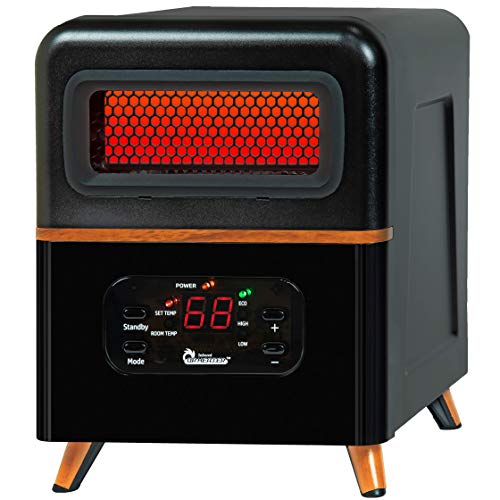
Specs as stated on the manufacturers' listings; the price shows on the retailer's page. Floor or wall · 750 W settingHeat Storm Phoenix Floor to Wall Infrared HeaterA home office or a small bedroom where you want the heater off the floor: it hangs on the wall or stands on its feet. The 750 W mode halves the draw when the room only needs topping up. The listing rates it for up to 150 sq. ft (about 14 m²) as the main heat in a well-insulated room.Watch out: The listing says its heat does not reduce oxygen or humidity: no electric heater burns oxygen, so that is true of all of them. Tip-over and overheat protection are not mentioned, and the warranty is 1 year.Check price on Amazon.ca ↗
 Wall-mounted · 1,000 W, small roomHeat Storm HS-1000-WX Deluxe Wall HeaterA small bedroom, kitchen or office where floor space is short. It plugs into a normal 120 V outlet, the cord can hide behind the heater when it is mounted over the outlet, and at 1,000 W it leaves more room on a 15 A circuit than a 1,500 W unit.Watch out: Not a fanless panel: the listing explains that the fan starts after a 15-second warm-up to circulate warm air. Rated for up to 100 sq. ft (about 9 m²) as main heat in a well-insulated room, as listed.Check price on Amazon.ca ↗
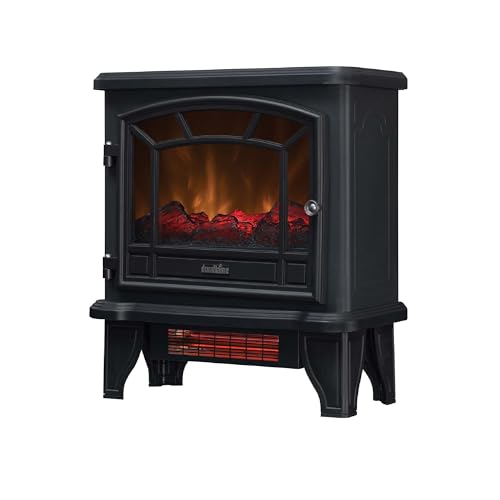 Looks · fireplace stoveDuraflame DFI-550-22 Infrared Quartz Fireplace StoveA living room where the heater should look like a wood stove. The flame effect runs with or without heat, the front door opens, and it needs no venting and no gas line: attach the legs and plug it in, as listed.Watch out: The listing claims zone heating for up to 1,000 sq. ft and savings on heating bills. It is still 1,500 W, the same as a small ceramic heater. Tip-over and overheat protection are not mentioned.Check price on Amazon.ca ↗
An infrared heater is sold on one promise: warmth you feel right away. That part is true. The part the box leaves out is that it makes no more heat than any other heater on the same outlet. Which one suits you comes down to three questions: are you heating a room or a person, is it indoors or outdoors, and does a 1,500 W plug-in give enough, or do you need a 240 V circuit?
The short answer
- Living room or finished basement: an infrared cabinet with a thermostat and a timer, like the Dr Infrared DR-978.
- Off the floor: a wall-mountable Heat Storm, the Phoenix at 1,500 W or the HS-1000-WX at 1,000 W for a small room.
- Garage bench or covered patio, no wiring: a fanless 1,500 W unit mounted high, aimed at where you stand or sit.
- A deck you use every evening: a 240 V patio heater such as the Dimplex DSH20W, installed by an electrician.
How we picked, and what we did not do: we have not run any of these heaters. Every specification on this page is quoted from the manufacturer’s Amazon.ca listing, checked November 24, 2026, and every product on a card was in stock in Canada that day. Where a listing leaves a number out, we write “not stated” rather than guess, and where a listing makes a claim physics does not support, we say so. Links to Amazon are affiliate links; BranchéQC may earn a commission at no extra cost to you. We do not write prices by hand: the button says “Check price on Amazon.ca” and the Amazon page is what counts.
How an infrared heater works, and what it does not do
Same heat per watt. An electric heater turns all the electricity it draws into heat. A 1,500 W heater gives 1,500 W of heat, about 5,100 BTU per hour (the listings round it to 5,200), whether the element is a quartz tube, a carbon lamp, a ceramic stone or oil. No element is “more efficient” than another. Only a heat pump delivers more heat than the electricity it uses, because it moves heat from outside rather than making it.
Different place it lands. A glowing element sends infrared radiation in straight lines, the way the sun warms your face on a cold, still day. It warms the people, the floor and the furniture it faces, and they warm the air in turn. That is why you feel it within seconds, why a draft does not blow it away, and why it does almost nothing for the corner it cannot see.
Where a saving can come from. If you sit in one chair in a cold room, beaming heat at that chair can keep you comfortable without heating the whole room to the same temperature. That is a use pattern, not a property of the heater. We make no percentage saving claim, and you should distrust any listing that does.
Infrared vs radiant heater: quartz, carbon and infrared cabinets
Radiant heat is infrared, so “infrared heater” and “radiant heater” usually describe the same thing: an element hot enough to glow, behind a reflector. The labels you will see on listings:
- Quartz tube or halogen: a filament inside a glass tube. Heats in seconds and glows orange or red, which some people find too bright in a living room.
- Carbon: a carbon fibre element. The Dr Infrared DR-238 pairs one with a mirror aluminum reflector it lists at 90 % reflectivity. It is the usual type on patio units.
- Infrared cabinet: quartz elements inside a wooden or metal box with a blower, often paired with a PTC (ceramic) element. The fan pushes warm air out, so a cabinet heats the room much like a fan heater does, with the comfort of a thermostat and a cool cabinet.
- Flat infrared panel: a thin fanless panel on a wall or ceiling. Wexstar is the name shoppers search; its 600 W panel showed only a delivery lead time on November 24, 2026, so no fanless indoor panel is a pick here.
The oil-filled “radiator” is the trap: despite the name, it warms mostly by convection. If you want to compare infrared against ceramic, oil-filled and convector heaters for a whole room, our guide to the best space heaters in Canada covers all four types; this page stays on infrared.
The 1,500 W limit on a standard outlet
Every plug-in heater on this page except the Dimplex stops at 1,500 W, and that is not a coincidence. A standard Canadian outlet is on a 120 V, 15 A circuit. At 1,500 W a heater draws 1,500 ÷ 120 = 12.5 A, most of what that circuit can carry. A second heater, a kettle or a hair dryer on the same circuit can trip the breaker.
- More watts on a box does not exist at 120 V. A plug-in that claims “much higher heat output” still tops out at 1,500 W. Compare BTU figures: at 1,500 W, every honest listing lands near 5,100 to 5,200 BTU/h.
- A lower setting is useful. The Heat Storm Phoenix runs at 750 W, the Dr Infrared DR-238 at 900 or 1,200 W, the HS-1000-WX at 1,000 W. Lower draw leaves room on the circuit.
- More heat means 240 V. The Dimplex DSH20W reaches 2,000 W on 240 V, and 240 V shop heaters go much higher. Both need a dedicated circuit installed by a licensed electrician.
The seven infrared heaters, compared on published specs
Every figure is the manufacturer’s own. Where a listing gives no number, the table says so rather than guessing.
| Model | Type | Power (as listed) | Mounting | Controls | Safety (as listed) |
|---|---|---|---|---|---|
| Dr Infrared Heater DR-978 Hybrid | Infrared + PTC, blower | 1,500 W high, 1,200 W low, Eco; 5,200 BTU/h | Floor cabinet | Thermostat 50 to 86 °F (10 to 30 °C); 12 h timer | Tip-over + overheat shut-off; UL and cUL certified |
| Heat Storm Phoenix Floor to Wall Infrared Heater | Infrared elements + heat exchanger | 750 W or 1,500 W; 5,200 BTU/h | Floor (removable feet) or wall | Thermostat with LED display; remote | Grill listed as safe to touch; tip-over not stated |
| Heat Storm HS-1000-WX Deluxe Wall Heater | Infrared elements + fan | 1,000 W; 3,400 BTU/h | Wall, less than 2 sq. ft (about 0.19 m²) | Thermostat with LED display; remote | Tip-over shut-off; grill listed as safe to touch |
| Duraflame DFI-550-22 Infrared Quartz Fireplace Stove | Infrared quartz, flame effect | 1,500 W; 5,200 BTU/h | Freestanding stove on legs | Adjustable thermostat; remote; flame without heat | Listed as safe around children and pets; tip-over not stated |
| Dr Infrared Heater DR-238 Carbon Infrared Outdoor Heater | Carbon infrared, no fan | 900, 1,200 or 1,500 W; 120 V | Wall or ceiling bracket included | 3 power settings; remote | IP55 indoor and outdoor; tip-over not applicable (mounted) |
| Heat Storm HS-1500-TC Tradesman Ceiling Mount Infrared Heater | Infrared, no fan mentioned | 1,500 W; 5,200 BTU/h; 110 V plug | Ceiling; cord listed as “8”, no unit | Not stated | IPX4 (splashing water); overheat not stated |
| Dimplex DSH20W Indoor/Outdoor Infrared Patio Heater | Electric infrared | 1,000, 1,500 or 2,000 W; 240 V | Not stated | 1, 2 or 3 h delay timer | IP65; 8 h auto shut-off |
Which infrared heater for your space
Dr Infrared Heater DR-978 HybridInfrared + PTC, blower · Floor cabinetThe infrared heater most people mean: a cabinet on the floor of a finished basement or a family room, with a thermostat that cycles it on and off and a 12-hour timer. No exposed heating element, a larger blower as listed, and the only pick that names a Canadian certification (cUL).Watch out: The listing promises “much higher heat output”, yet it is a 1,500 W heater like every plug-in model. With a blower, it mostly warms the air, like a fan heater. No noise figure is stated.Check price on Amazon.ca ↗Heat Storm Phoenix Floor to Wall Infrared HeaterInfrared elements + heat exchanger · Floor (removable feet) or wallA home office or a small bedroom where you want the heater off the floor: it hangs on the wall or stands on its feet. The 750 W mode halves the draw when the room only needs topping up. The listing rates it for up to 150 sq. ft (about 14 m²) as the main heat in a well-insulated room.Watch out: The listing says its heat does not reduce oxygen or humidity: no electric heater burns oxygen, so that is true of all of them. Tip-over and overheat protection are not mentioned, and the warranty is 1 year.Check price on Amazon.ca ↗Heat Storm HS-1000-WX Deluxe Wall HeaterInfrared elements + fan · Wall, less than 2 sq. ft (about 0.19 m²)A small bedroom, kitchen or office where floor space is short. It plugs into a normal 120 V outlet, the cord can hide behind the heater when it is mounted over the outlet, and at 1,000 W it leaves more room on a 15 A circuit than a 1,500 W unit.Watch out: Not a fanless panel: the listing explains that the fan starts after a 15-second warm-up to circulate warm air. Rated for up to 100 sq. ft (about 9 m²) as main heat in a well-insulated room, as listed.Check price on Amazon.ca ↗Duraflame DFI-550-22 Infrared Quartz Fireplace StoveInfrared quartz, flame effect · Freestanding stove on legsA living room where the heater should look like a wood stove. The flame effect runs with or without heat, the front door opens, and it needs no venting and no gas line: attach the legs and plug it in, as listed.Watch out: The listing claims zone heating for up to 1,000 sq. ft and savings on heating bills. It is still 1,500 W, the same as a small ceramic heater. Tip-over and overheat protection are not mentioned.Check price on Amazon.ca ↗Dr Infrared Heater DR-238 Carbon Infrared Outdoor HeaterCarbon infrared, no fan · Wall or ceiling bracket includedA covered deck, balcony or a garage door opening: mounted high on a wall or under a soffit, it beams heat at the people below. It plugs into a standard 120 V outlet, and the listing names patios, backyards, garages and decks.Watch out: At 1,500 W it warms the people facing it, not the patio. The listing does not mention a GFCI outlet, a thermostat or a timer: plug it into a weatherproof, GFCI-protected outlet anyway.Check price on Amazon.ca ↗Heat Storm HS-1500-TC Tradesman Ceiling Mount Infrared HeaterInfrared, no fan mentioned · Ceiling; cord listed as “8”, no unitA garage or workshop with an outlet in the ceiling or near it: it hangs above the bench and warms you and your tools instead of the cold air, with no wiring. The listing also names patios and balconies.Watch out: The listing calls IPX4 “protected against rain and dust”, but the X means no dust rating is given. No thermostat, timer or safety cut-off is stated.Check price on Amazon.ca ↗Dimplex DSH20W Indoor/Outdoor Infrared Patio HeaterElectric infrared · Not statedA deck or a screened porch you use every evening, where 1,500 W is not enough: on a 240 V circuit it reaches 2,000 W, about a third more heat than any plug-in. The listing states full heat within 3 seconds and an IP65 rating for indoor and outdoor use.Watch out: 240 V means a dedicated circuit installed by a licensed electrician. The listing states neither the plug type nor the mounting method: read the installation manual before you buy.Check price on Amazon.ca ↗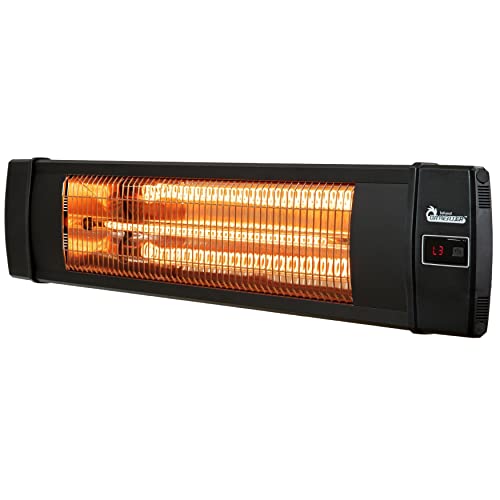


Dr Infrared heater: which model
Dr Infrared is the brand most Canadians type before “infrared heater”, and it sells three different things under one name. The cabinets (DR-978, our pick, and the newer DR-123, which lists a 30 to 99 °F thermostat, under 45 dB and four wheels) pair quartz with a PTC element and a blower. The carbon patio heaters (DR-238 for the wall or ceiling, plus a tripod model) are fanless and beam heat. The 240 V shop and patio units (such as the DR-239 at 3,000 W) need an electrician.
The DR-978 is the only cabinet in our picks that names cUL certification on the listing. Whatever you buy, look for a Canadian certification mark (CSA, cUL or cETL) on the heater itself when it arrives.
Wall mounted infrared heater: panels and wall units
A wall unit frees the floor and keeps the heater away from feet, toys and pets. Two of our picks hang on a wall and plug into a normal outlet: the Heat Storm Phoenix (1,500 W, also stands on feet) and the HS-1000-WX (1,000 W, wall only, the cord can hide behind it when mounted over the outlet). Both have a fan, so they warm the air as well as what they face.
The HS-1000-WX listing names bathrooms among its uses. In a bathroom, mount it where the manual says, well away from the tub and shower, and on a GFCI-protected outlet. A fanless flat panel is the quieter design, but none was in stock with a real listing on the day we checked.
Infrared garage heater: heat the bench, not the garage
Infrared is the best 120 V option for a cold garage because it does not depend on warming the air: you feel it in seconds, and opening the big door does not erase it. The Heat Storm HS-1500-TC hangs from the ceiling and plugs in. For a unit you can move to the job, the Dr Infrared carbon heater with tripod lists 900, 1,200 or 1,500 W, IP55, a tip-over cut-off at 60° and a reminder that outdoors it must be plugged into a GFCI outlet.
The limit is the 1,500 W ceiling. Step out of the beam and you are back in a cold garage. To keep a whole garage above freezing all winter, you need a 240 V hardwired heater; our guide to the best garage heaters in Canada sizes those.
Outdoor infrared heater for a patio: electric vs gas
Outdoors, air heating is hopeless: the wind takes it. Radiant heat is the only kind that works, which is why every patio heater is some form of infrared. The real choice is the fuel.
| Electric infrared | Propane or natural gas | |
|---|---|---|
| Heat | 1,500 W plug-in (about 5,100 BTU/h); 2,000 W and up on 240 V | Much more: one natural gas wall unit we saw lists 31,500 BTU |
| Installation | Plug into a weatherproof GFCI outlet, or a 240 V circuit by an electrician | Propane tanks to refill, or a gas line installed by a licensed gas fitter |
| Combustion | None: no flame, no fumes | Burns fuel: outdoor use only, as the manual sets out |
| Best for | A covered deck, a balcony, a screened porch | An open patio or a large group |
We list electric patio heaters only. A 1,500 W unit warms the people seated in front of it, not the patio, so mount it high and aim it at the table. Check the IP rating: the DR-238 lists IP55, the Dimplex DSH20W IP65, and the Heat Storm HS-1500-TC IPX4, which covers splashing water but carries no dust rating. Under a roof, even IPX4 is enough; in driving rain or snow, look for a higher first and second digit.
Duraflame infrared stove heater: for the look
Duraflame’s infrared stoves look like small cast iron wood stoves, with a flame effect behind a door that opens. The DFI-550-22 we pick lists a flame effect that runs with or without heat, a thermostat and a remote. Under the shell it is a 1,500 W quartz heater, like the others here.
Read its claims accordingly. “Up to 1,000 square feet” is supplemental zone heating in the maker’s own words, and no 1,500 W heater should be counted on to heat 1,000 sq. ft on its own in a Canadian winter. Buy it for the look and the comfort in one room. For more fireplace styles, inserts and wall units, see our guide to the best electric fireplaces in Canada.
Infrared heater safety: tip-over, overheat, clearance, cords
- Tip-over and overheat shut-off. On a portable heater, both should be on the listing. The DR-978 lists both; the HS-1000-WX lists tip-over. The Phoenix and the Duraflame listings mention neither, so check the manual.
- Clearance. A radiant element heats what it faces, including a curtain or a sofa. The common fire safety rule is about 1 m (3 ft) from anything that can burn; the clearance in your manual wins.
- Never an extension cord or a power bar. Plug the heater straight into a wall outlet. A 12.5 A load overheats light cords and power bars. A plug or outlet that feels hot is a reason to stop using it.
- Never unattended. Turn a portable heater off when you leave the room or go to bed, unless its manual says otherwise. A timer helps: the DR-978 lists 12 hours, the Dimplex an 8-hour automatic shut-off.
- Certification. Look for CSA, cUL or cETL on the heater’s label. Only the DR-978 listing among our picks names a Canadian mark (cUL).
- Outdoors and in bathrooms: a GFCI-protected outlet, and an IP rating that matches the exposure.
Gas heaters add one rule. Any heater that burns propane or natural gas produces carbon monoxide if it burns badly. If you use one in or near a garage or a home, follow its manual to the letter and keep a working CO alarm close by. Electric heaters burn nothing and produce no carbon monoxide.
Infrared heater power consumption and running cost
An infrared heater uses its rated wattage while the element is on. Energy is watts × hours ÷ 1,000 = kilowatt-hours. Here is the arithmetic for the settings our listings state, at an example rate of 15 ¢/kWh (use your utility’s rate):
| Setting | Energy per hour | At 15 ¢/kWh, per hour | 4 h a day, 30 days |
|---|---|---|---|
| 750 W (Heat Storm Phoenix low) | 0.75 kWh | about 11 ¢ | 90 kWh, about $13.50 |
| 1,000 W (Heat Storm HS-1000-WX) | 1 kWh | 15 ¢ | 120 kWh, about $18 |
| 1,500 W (any plug-in on high) | 1.5 kWh | 22.5 ¢ | 180 kWh, about $27 |
| 2,000 W (Dimplex DSH20W high) | 2 kWh | 30 ¢ | 240 kWh, about $36 |
These are ceilings. A heater with a thermostat cycles off once the room reaches its set point, so the real figure is lower and depends on the room, the insulation and the weather. The patio and garage units without a stated thermostat run at full power for as long as they are on.
Where to buy an infrared heater in Canada
| Retailer | Strength | Note |
|---|---|---|
| Amazon.ca | Widest range: Dr Infrared, Heat Storm, Duraflame, Dimplex, patio and garage units | Read the bullets for the voltage, the certification mark and the IP rating |
| Hardware and home stores | May carry store brands and seasonal infrared heaters | Range varies by store and by winter |
| Warehouse clubs | May carry infrared cabinets in season | Stock is seasonal; check online before you drive |
Frequently asked questions
What is the best infrared heater in Canada?
For a living room or finished basement, the Dr Infrared DR-978 cabinet, which lists a thermostat, a 12-hour timer, tip-over and overheat shut-off and cUL certification. For a wall, the Heat Storm Phoenix. For a covered patio on a plug, the Dr Infrared DR-238. All seven picks were in stock on Amazon.ca on November 24, 2026.
Are infrared heaters more efficient than other space heaters?
No. Every electric resistance heater turns one kilowatt-hour into the same amount of heat. Infrared puts that heat on the people in front of it, which can keep one spot comfortable without heating the whole room. Any saving comes from how you use it, not from the element.
What is the difference between an infrared heater and a radiant heater?
Radiant heat is infrared. Sellers say “infrared” for heaters with a glowing quartz, carbon or halogen element that beams heat at what it faces. An oil-filled “radiator” is the opposite case: despite its name it mostly warms the air around it.
How much electricity does an infrared heater use?
Its rated wattage, while the element is on. A 1,500 W heater uses 1.5 kWh per hour at full power, about 22.5 ¢ an hour at an example rate of 15 ¢/kWh. A thermostat that cycles the heater off lowers the real figure. Use your own utility's rate.
Can an infrared heater heat a garage?
A 1,500 W plug-in infrared heater warms you at the workbench, not the garage: you feel it in seconds, and opening the door does not erase it. Heating a whole garage through the winter takes a 240 V hardwired heater.
Are outdoor infrared heaters worth it in Canada?
On a covered or sheltered patio, yes, for warming people seated in front of the heater. In open wind on a cold night, a 1,500 W unit is modest. Plug outdoor units into a weatherproof GFCI outlet and check the IP rating: the DR-238 lists IP55, the Dimplex DSH20W IP65.
Is it safe to leave an infrared heater on overnight?
Turn any portable heater off when you go to bed or leave the room, unless its manual says otherwise. Keep it about 1 m (3 ft) from curtains, bedding and furniture, plug it straight into a wall outlet, never an extension cord or power bar, and pick a model with tip-over and overheat shut-off.
Is a Dr Infrared heater or a Heat Storm better?
They answer different needs. The Dr Infrared DR-978 is a floor cabinet with a blower, a thermostat, a timer and stated cUL certification. Heat Storm specialises in wall-mountable units: the Phoenix hangs or stands, the HS-1000-WX is wall only. Neither brand makes a plug-in heater stronger than 1,500 W.
Keep reading
Infrared warms the person, so warm the person directly too. For a cold evening on the couch, see the best heated blankets in Canada and, for the room as a whole, a smart thermostat that turns the heat down when nobody is home.