
Best Space Heater in Canada (2026)
Specs checked November 3, 2026 · Version française
Every space heater you can plug into a normal Canadian outlet produces roughly the same amount of heat. That one fact settles most of this purchase. Ceramic, oil-filled, infrared and convector models differ in how the heat reaches you, how loud they are, how fast they work and how well they protect themselves. None of them is secretly more powerful than the others, whatever the box says.
The short answer
- Bedroom or office, quick heat: a 1,500 W ceramic heater with a thermostat, tip-over and overheat protection.
- Bedroom, all night, silence: an oil-filled radiator. Slow to start, quiet once warm.
- One cold chair in a drafty room: infrared, which warms you rather than the air.
- A garage in January: no plug-in heater. You need a 240 V unit wired by an electrician.
- Always: straight into a wall outlet, never an extension cord or a power bar.
How we picked, and what we did not do: we have not bench-tested these heaters. Every specification on this page is quoted from the manufacturer’s own Amazon.ca listing, checked November 3, 2026, and every unit was confirmed in stock in Canada that day. Where a listing contradicts itself or leaves out a figure that matters, we say so. Links to Amazon are affiliate links; BranchéQC may earn a commission at no extra cost to you. We do not publish prices by hand; the Amazon page is what counts.
Why every plug-in heater stops at 1,500 W
A standard household outlet in Canada is 120 V on a 15 A circuit. Manufacturers cap portable heaters at 1,500 W so they can run on that circuit for hours, and 1,500 W at 120 V already draws 12.5 A, about 83 percent of what the circuit is built for. Add a kettle on the same breaker and it trips.
The heat itself follows from the wattage: 1,500 W of resistance heating gives about 5,100 BTU per hour (1,500 x 3.412). Honeywell prints the figure for its tower: 5,115 BTU on high, 2,559 on low. So when a listing promises “more powerful” or “heats a large room”, it is describing how the heat is distributed (fan, oscillation, radiation), not more heat. Our picks state coverage from 100 to 270 sq ft on the same 1,500 W: those are assumptions, not measurements.
Ceramic vs oil-filled radiator vs infrared: which heats a room, which heats a person
| Type | How it heats | Best for | Trade-off |
|---|---|---|---|
| Ceramic (fan) | Fan pushes air across a hot ceramic element | Fast heat in a closed room | You hear the fan |
| Ceramic tower | Same, in a tall oscillating column | Spreading warm air across a bigger room | Taller footprint, still a fan |
| Oil-filled radiator | Sealed oil heats the fins, which radiate and convect | Silent, steady heat overnight | Slow to start, heavy, fins stay hot |
| Infrared / quartz | Radiates heat to people and objects in line of sight | A drafty spot, a person in one chair | Warms what it faces, not the far corner |
| Convector panel | Warm air rises along a flat panel | A tenant's cold room, wall-mountable | Slower than a fan heater |
Decide whether you are heating the room or the person. Ceramic, oil-filled and convector heaters warm the air, so they work best with the door closed. A radiant infrared heater warms you and your chair directly, so it feels warm within seconds even in a draft, but does little for the rest of the room. Cabinet infrared models with a blower, like the Dr Infrared, behave more like fan heaters than the name suggests.
Sizing by room: what 1,500 W actually covers
There is no honest universal square-footage figure: the same heater that warms an insulated bedroom barely dents a drafty basement at minus 25. In practice:
- A closed room that already has heat (bedroom, office): the ideal use.
- A desk or a single chair: heat the person with a small ceramic aimed at your legs, or an infrared.
- Open-plan floors and uninsulated basements: one heater will not make the space even.
- Two heaters to double the heat? Only on two different circuits. Two loads of 12.5 A on one 15 A circuit trip the breaker.
The seven heaters, compared on published specs
Every figure below is the manufacturer’s own, from the Amazon.ca listing. “Not stated” means exactly that: the listing’s title and bullets do not give the figure, so look at the rating label or the manual before you rely on it.
| Model | Type | Stated power | Safety stated | Certification |
|---|---|---|---|---|
| DREO ceramic 1,500 W, cETLus listed | Ceramic, fan | 1,500 W, low / medium / high | Tip-over + overheat | cETLus (listing: for Canada & US) |
| Honeywell HCE317BC slim ceramic tower | Ceramic tower, fan | 1,500 W / 750 W (5,115 / 2,559 BTU) | 360° tip-over + 2 overheat cut-offs | Not stated in the listing |
| Lasko 754201 ceramic, desk size | Ceramic, fan | 1,500 W / 900 W | Tip-over + overheat | ETL listed (per listing) |
| DREO oil-filled radiator, 7 fins | Oil-filled radiator, fanless | 600 / 900 / 1,500 W + ECO | Tip-over + overheat + child lock | ETL listed (per listing) |
| Dr Infrared Heater 1,500 W cabinet | Infrared quartz + PTC, blower | 1,500 W, 12.5 A, 120 V | Tip-over + overheat | Not stated in the listing |
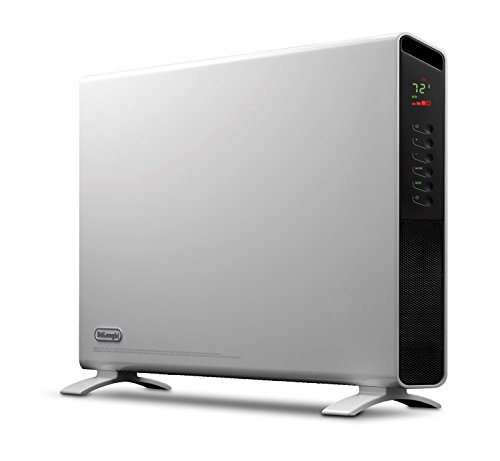
| De'Longhi HCX9115ECA convector panel | Convector panel, floor or wall | 1,500 W, multiple settings | Tip-over + thermal shut-off | Not stated in the listing |
| Dyson Hot+Cool HF1 heater fan | Heater fan, heats and cools | Not stated in the listing | Tip-over auto-off + child lock | Not stated in the listing |
Which one for your room
DREO ceramic 1,500 W, cETLus listedCeramic, fan · 1,500 W, low / medium / highA bedroom or home office. Thermostat from 5 to 35 °C in 1 °C steps, 70° oscillation, 12-hour timer, stated at 34 dB, and the listing names the Canadian mark outright.Watch out: The listing claims rooms up to 270 sq ft. That is an assumption about insulation and outdoor cold, not a measured output: it is the same 1,500 W as every other heater here.Check price ↗Honeywell HCE317BC slim ceramic towerCeramic tower, fan · 1,500 W / 750 W (5,115 / 2,559 BTU)A living room or larger bedroom where a tall, oscillating column spreads warm air better than a cube on the floor. Programmable thermostat and a 1, 2, 4 or 8-hour auto-off.Watch out: The listing says it is not suitable for bathrooms, laundry rooms or other humid places. No certification mark is named in the bullets: check the rating label.Check price ↗Lasko 754201 ceramic, desk sizeCeramic, fan · 1,500 W / 900 WUnder or beside a desk. At 9.2 x 7 x 6 inches it warms the person sitting there, which is cheaper than heating the whole floor. Manual thermostat, 8-foot cord, 3-year limited warranty.Watch out: Lasko itself states rooms up to 100 sq ft. The long cord is there so you never need an extension: plug it into the wall, not the computer's power bar.Check price ↗DREO oil-filled radiator, 7 finsOil-filled radiator, fanless · 600 / 900 / 1,500 W + ECOA bedroom where you want silent, steady heat through the night. Digital thermostat, 24-hour timer, remote, mute and screen-off modes.Watch out: Fanless means slow to warm a cold room, and the fins stay hot for a while after it shuts off. It is heavy enough that the wheels matter.Check price ↗Dr Infrared Heater 1,500 W cabinetInfrared quartz + PTC, blower · 1,500 W, 12.5 A, 120 VA finished basement or family room. Electronic thermostat from 50 to 85 °F, 12-hour shut-off timer, remote, caster wheels, blower stated at 39 dB.Watch out: The listing says it can heat a large room. It draws the same 1,500 W as the small ceramics and weighs 24 lb. With a blower it mostly heats the air, like a fan heater, rather than beaming heat at you.Check price ↗De'Longhi HCX9115ECA convector panelConvector panel, floor or wall · 1,500 W, multiple settingsA tenant's cold room: a slim panel that stands on feet or hangs on the wall with the included kit. Digital thermostat, 24-hour timer, ECO PLUS mode, and an anti-freeze setting below 5 °C.Watch out: Sold as a convector, yet the listing also describes a dual lateral fan system, so do not assume it is silent. Wall-mounted, it still plugs into an outlet.Check price ↗Dyson Hot+Cool HF1 heater fanHeater fan, heats and cools · Not stated in the listingA bedroom or nursery where you want one machine for winter heat and summer airflow, no exposed elements, a 26 dB sleep mode and app or voice control.Watch out: No wattage in the listing. As a plug-in appliance it cannot exceed what the outlet allows, so you are paying for the cooling fan, the quiet and the design, not extra heat.Check price ↗




Safety: the rules that prevent fires
Two risks cause space heater fires: a connection that overheats, and things that sit too close.
- Never an extension cord or a power bar. 12.5 A continuously heats an ordinary cord or power bar. Plug directly into a wall outlet.
- Keep about 1 m (3 ft) clear of curtains, bedding, clothes, furniture and paper on every side.
- Tip-over switch and overheat protection are the minimum. Every pick above lists both.
- Look for a Canadian certification mark on the unit itself, such as CSA, cUL or cETL. The small “c” means valid in Canada; “ETL listed” in a listing does not say which mark is on the label.
- Keep it away from water unless the manufacturer explicitly allows bathroom use. Honeywell’s listing, for one, rules it out.
- Turn it off when you leave the room or go to sleep.
- A plug or outlet that is hot to the touch means unplug it and have the outlet checked by a licensed electrician.
How to clean a space heater
The burning smell on the first cold night is dust cooking on the element. Clean the heater before the season and monthly while in use. Unplug it and let it cool fully. Vacuum the grilles with a soft brush attachment and wipe the housing with a dry or barely damp cloth. Never spray anything into the case or take it apart. Clean any filter (the Dr Infrared listing mentions one) as the manual describes. An oil-filled radiator only needs its fins dusted; the oil is sealed.
Is a Dyson space heater worth it?
The Dyson HF1 listing promises fast whole-room heating, a 26 dB sleep mode, no exposed elements, tip-over shut-off, a child lock and app control. It also cools in summer, and that is the real argument: one machine, all year. What the listing does not give is a wattage. It works within the same outlet limit as everything else here, so it does not put more heat into the room than a far cheaper ceramic heater. Its “30 % more energy efficient” claim is against a heater with no thermostat, a saving every model here shares.
Running cost, computed in the open
The formula: kilowatts x hours x your rate. A 1,500 W heater on high uses 1.5 kWh per hour. The table uses an example rate of 15 cents per kWh to keep the arithmetic easy. It is not any utility’s price, so use the rate on your own provincial bill. For reference, Hydro-Québec’s residential Rate D was 11.142 cents per kWh before taxes above the first 40 kWh a day as of April 1, 2026, a threshold an electrically heated Quebec home usually passes in winter.
| Use, on high | Energy | At 15 ¢/kWh (example) | At 11.142 ¢/kWh (Quebec) |
|---|---|---|---|
| 1 hour | 1.5 kWh | $0.23 | $0.17 |
| 4 h a night, 30 days | 180 kWh | $27.00 | $20.06 |
| 8 h a day, 30 days | 360 kWh | $54.00 | $40.11 |
| Low setting (750 W), 4 h x 30 days | 90 kWh | $13.50 | $10.03 |
These are ceilings, before taxes. The thermostat cycles the element off once the room is warm, so real costs are usually lower.
Space heater vs baseboard vs heat pump
Many Canadian homes, especially in Quebec, are heated by electric baseboards. A baseboard and a space heater are the same technology, turning each kilowatt-hour into the same heat. A space heater only saves money if it lets you turn the rest of the house down, say a warm home office with cooler bedrooms. On top of an unchanged thermostat, it just adds to the bill.
A heat pump moves heat rather than making it, so it delivers more heat than the electricity it uses for much of the year. In a room it already serves, a resistance heater can cost more for the same warmth. And a room that needs a portable heater every day of winter needs permanent heat, wired by a licensed electrician.
What the American reviews leave out
- The garage. Lasko’s listing mentions garages. A 1,500 W portable cannot heat one in a Canadian January; that takes a 240 V unit on a dedicated circuit. Our garage heater guide covers it.
- The certification mark. American round-ups check for UL or ETL. Here the mark must be valid in Canada, and only one of our picks names cETLus in its listing.
- Dry winter air. Warming air lowers its relative humidity whatever the heater type; no heater removes water. A fanless model only feels less drying because it moves less air.
- The closed cottage. De’Longhi markets an anti-freeze setting for vacation homes, which means a plug-in heater running unattended. Protecting pipes in an empty cottage is a job for permanent, hardwired heat.
- The outage. A 1,000 Wh power station runs a 1,500 W heater for about 40 minutes, less after inverter losses. A heated blanket on the same battery lasts many hours.
Where to buy in Canada
| Retailer | Strength | Note |
|---|---|---|
| Amazon.ca | Widest range, including oil-filled and infrared models | Read the bullets for the certification mark, then the label on arrival |
| Canadian Tire | Seasonal heater aisle, frequent promotions | Range varies by store; check online first |
| Home Depot | Mainstream ceramic and oil-filled models | Easy to read the rating label before buying |
| Walmart | Budget ceramic heaters | Compare thermostat and safety features, not just price |
| Best Buy | Dyson and smart heaters | App control does not change the 1,500 W ceiling |
Frequently asked questions
What is the best space heater in Canada?
For a bedroom or office, a 1,500 W ceramic heater with a thermostat, tip-over and overheat protection and a Canadian certification mark. For silence, an oil-filled radiator; for a drafty chair, infrared. All plug-in heaters give about the same heat, so choose on noise, speed and safety.
Which type of space heater is the most efficient?
None. Ceramic, oil-filled, infrared and convector heaters all turn one kilowatt-hour into the same amount of heat. A thermostat, a closed door and heating only the room you use are what lower the bill. Only a heat pump delivers more heat than the electricity it uses.
Ceramic or oil-filled heater: which is better?
Ceramic heats a room in minutes and is light, but you hear the fan. Oil-filled is silent and keeps radiating after it cycles off, but is slow and heavy. Ceramic for short sessions, oil-filled for a bedroom overnight.
Do infrared heaters heat a room?
A radiant quartz heater warms the people and objects it faces rather than the air, so it feels warm instantly, even in a draft. Cabinet models with a blower also push warm air around. Either way, output at 120 V stays near 1,500 W.
How do I clean a space heater?
Unplug it and let it cool. Vacuum the grilles with a soft brush attachment, wipe the outside with a dry or barely damp cloth, and never spray anything into the housing. Clean any filter as the manual says.
Is a Dyson space heater worth it?
Only if you want one quiet machine that heats in winter and cools in summer. For heat alone, no: it works within the same outlet limit as far cheaper heaters, and its listing does not state its wattage.
How much does it cost to run a 1,500 W space heater?
Multiply 1.5 kW by the hours and by your own rate. At an example rate of 15 cents per kWh, four hours a night for 30 days is 180 kWh, about $27 before taxes. The thermostat usually brings the real figure lower.
Can I plug a space heater into an extension cord or power bar?
No. A 1,500 W heater draws 12.5 A continuously, which overheats ordinary cords and power bars. Plug it straight into a wall outlet.
How big a room can a 1,500 W space heater heat?
It gives about 5,100 BTU per hour, and the area that keeps comfortable depends on insulation, windows and outdoor cold. It suits a closed room that already has heat, not an open-plan floor, an uninsulated basement or a garage.
Keep reading
Want the glow of a fire with the same 1,500 W outlet math? See the best electric fireplaces in Canada. Heating a workshop instead of a room? The best garage heaters in Canada explains the 240 V step. To stay warm in bed for a fraction of the power, read our guide to the best heated blankets in Canada. And for winter outages, the best portable power stations in Canada shows why watt-hours, not watts, decide what you can keep running.