
Block Heater Guide for Canada (2026): When to Plug In, Timers and Cords
Specs checked November 3, 2026 · Version française
A block heater is the most Canadian car part there is, and most of the advice about it is folklore. People plug it in at supper and unplug it at breakfast, run it through a thin indoor cord, and never check whether it still works until the morning it does not. Three things actually matter: when you turn it on, what it is plugged into, and whether the element is still alive. This guide covers all three, plus the add-on heaters for engines, batteries and machines that never had one.
The short answer
- When: CAA-Québec’s guidance is below minus 5 °C, and strongly recommended at minus 15 °C or colder.
- How long: three to four hours before you leave. All night adds cost, not warmth.
- The accessory that pays: an outdoor-rated timer with a current rating above your heater’s draw.
- The cord: outdoor-rated (SJTW), heavy gauge, as short as possible, never coiled.
- No block heater? A stick-on oil pan pad, a magnetic heater on steel, or a battery blanket, each with real limits.
- Electric car: no block heater at all. Schedule preconditioning instead.
How we picked, and what we did not do: we have not bench-tested these products. Every specification on this page is quoted from the product’s own Amazon.ca listing, checked November 3, 2026, and every item was confirmed in stock in Canada that day. Where a listing is vague or contradicts itself, we say so. Links to Amazon are affiliate links; BranchéQC may earn a commission at no extra cost to you. We do not publish prices by hand; the Amazon page is what counts. We do not sell engine-specific frost-plug heaters here, because the right one depends on your exact engine.
What a block heater does, and how it works
A block heater is a resistive heating element, the same principle as a kettle, wired to a 120 V cord that ends in a plug at the front of the car. Plugged in overnight on a timer, it warms the coolant or the oil so that the engine is not starting from the outside temperature. The engine cranks more easily, the oil reaches the bearings sooner, and the heater core has warm coolant to work with a few minutes earlier. CAA-Québec also credits it with lower fuel use on the first kilometres, by up to 15 percent according to its guidance, and more on trips under 20 km.
Most block heaters have no thermostat. Plugged in, they heat at full wattage; unplugged, they stop. That is why the timing question matters so much, and why a timer is the accessory worth buying. If you are wondering whether your car has one, look for a short black cord with a three-prong plug behind the grille or under the lower bumper, sometimes under a small cap or folded up near the radiator.
The types of block heater, and what each one heats
- Frost-plug (core) heater. The classic. It replaces one of the round plugs in the side of the engine block and sits directly in the coolant. It is engine-specific: the diameter and angle must match your block, which is why you buy it by part number.
- Inline coolant heater. Spliced into a heater hose, sized to the hose diameter. Some circulate the coolant as they heat it. Also a mechanic’s install, since the cooling system has to be drained and bled.
- Oil pan pad. A thin silicone heater glued to the bottom of the oil pan. It warms the oil rather than the coolant. No draining involved, but the surface has to be flat, clean bare metal.
- Magnetic heater. A small heater on a strong magnet that sticks to a steel oil pan or block. Portable, which makes it ideal for a snow blower or a generator. Useless on aluminum.
- Dipstick heater. A heating rod that slides down the dipstick tube into the oil. Low wattage and mostly used on small engines; check that your tube is long and straight enough.
- Battery blanket or warmer. Not a block heater at all, but its usual companion. A cold battery delivers less cranking current exactly when a cold engine needs more, and a blanket keeps the battery warm enough to do its job.
Wattage varies widely. Units sold in Canadian stores run from about 200 W for a magnetic heater to 1,500 W for some circulating models. The number is printed on the heater or listed in your owner’s manual, and you will need it for the timer and cord decisions below.
When to plug in a block heater, and for how long
| Question | CAA-Québec guidance |
|---|---|
| From what temperature? | Below minus 5 °C |
| When is it most useful? | Strongly recommended at minus 15 °C or colder |
| How long before leaving? | 3 to 4 hours is enough |
| All night? | Not necessary |
Treat those thresholds as guidance, not law. Your owner’s manual may give its own, diesel engines are usually more demanding, and a car parked in a wind-exposed driveway cools faster than one beside the house. The duration point is the one that saves money. After a few hours the coolant temperature levels off, because the heater is only replacing the heat the engine loses to the air. Plugging in from 6 p.m. to 7 a.m. gives you the same engine temperature at breakfast as a timer set three or four hours ahead; the extra nine hours are simply billed.
The arithmetic is easy to do for your own heater and province: watts divided by 1,000, times hours, gives kilowatt-hours. A 1,000 W heater uses 4 kWh in four hours and 12 kWh in twelve. In Quebec, at the second tier of Hydro-Québec’s Rate D in effect April 1, 2026 (11.142 cents per kWh before taxes), that is about 45 cents against about $1.34 per morning. Multiply by your own rate and the number of cold mornings you expect.
Block heater timers: outdoor rating and amperage
A timer sits between the outdoor outlet and the cord. You plug in at night as usual and the timer switches the power on three to four hours before you leave. Two things on the listing decide whether a timer is suitable.
- It must be rated for outdoor use, with a cover that protects the plug while it is in use. An indoor timer in a snowbank is a short circuit waiting to happen.
- Its rating must exceed your heater’s draw. Divide watts by volts: a 1,000 W heater at 120 V draws about 8.3 A, a 1,500 W one about 12.5 A. Both timers below are rated 15 A. If you also run a battery blanket off the same timer, add its watts.
Avoid the dusk-to-dawn and countdown timers sold for holiday lights. They switch on in the evening, which is the opposite of what a block heater needs. Thermostatic plugs sold for heat cables have the same problem: the common ones switch on around 3 °C, well above any block heater threshold, so they would run the heater almost all winter. Some block heater cords now come with a timer or a temperature sensor built in; if yours does, check its switching temperature the same way.
Block heater extension cords: gauge, length and the circuit
The cord is the weak link in most setups. Look for a jacket code ending in W (SJTW is the common one), which means outdoor-rated, and a jacket that stays flexible in the cold, because a stiff cord cracks where it bends. Gauge works backwards: the lower the number, the thicker the wire. The longer the run and the higher the heater’s wattage, the thicker the cord should be; a 12-gauge cord leaves comfortable headroom for a 1,000 to 1,500 W heater, while a thin 16-gauge indoor cord is the wrong tool. Follow the heater maker’s recommendation when it gives one.
Use the shortest length that reaches, never leave a cord coiled while it carries current (a coil traps heat), and keep it out of the path of the garage door and the snow blower. Then think about the circuit. A standard outdoor outlet is on a 120 V, 15 A circuit, often shared with other outlets. A block heater, a battery blanket, a heated mat on the steps and the holiday lights all add up, and the breaker tends to trip at 3 a.m. on the coldest night.
How to test a block heater
The surest test is with an ohmmeter, cord unplugged. Measure across the two flat pins of the plug. A healthy element reads close to what its wattage predicts, using the formula resistance equals volts squared divided by watts: about 14.4 ohms for a 1,000 W heater at 120 V, about 9.6 ohms for 1,500 W. An open or infinite reading means a broken element or a broken cord. Then measure between each flat pin and the round ground pin: any reading at all means an insulation fault, and the heater should not be plugged in again until it is fixed.
Rougher checks also work. Plug-in indicators that light up when current is actually flowing exist; the single unit we found on Amazon.ca was out of stock, so we do not list one. Or plug the heater in for an hour and feel the upper radiator hose or the area around the heater: it should be noticeably warmer than the rest of the engine. If the element tests fine but nothing heats, the cord is the usual suspect, and it can be replaced on its own.
The accessories, compared on published specs
Every figure below is the manufacturer’s own, taken from the Amazon.ca listing. Where a listing gives no certification or no figure, the table says so instead of guessing.
| Product | Type | Rating | Certification | Key detail |
|---|---|---|---|---|
| BN-LINK outdoor 7-day programmable timer | Programmable outdoor timer | 125 V / 15 A / 1,875 W | ETL Listed (per listing) | Up to 8 on/off programs, weekday and weekend schedules, 2 grounded outlets |
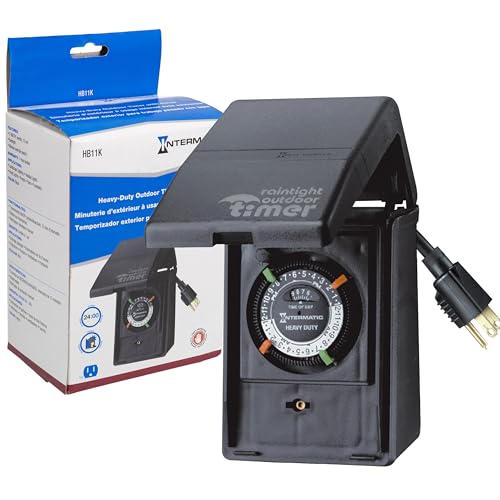
| Intermatic HB11K 15 A heavy-duty outdoor timer | Mechanical outdoor timer | 15 A | Not stated in listing | 2 on / 2 off per day with removable trippers, 30-minute minimum, outdoor enclosure with flip cover |
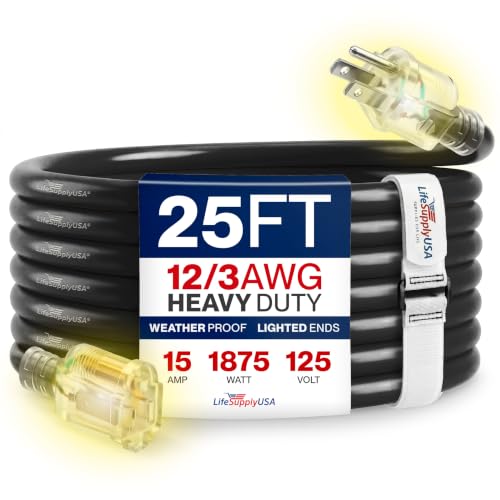
| LifeSupplyUSA 25 ft 12/3 SJTW outdoor cord | Outdoor extension cord | 15 A / 125 V / 1,875 W | Not stated in listing | 12 gauge, SJTW jacket, lighted end, described as cold-resistant |
| Zerostart 3600006 replacement cordset, 5 ft | Replacement block heater cord | 120 V / 15 A plug | Not stated in listing | 18/3 HPN wire, right-angle silicone connector, for freeze plug, block, oil pan and transmission heaters |
| Zerostart 3400017 magnetic heater, 200 W | Magnetic heater | 120 V / 200 W | CSA approved (per listing) | Built-in thermostat, will not exceed 250 °F (121 °C), quick-grip handle |
| Canadian Polar Pad CP512 oil pan heater, 250 W | Stick-on oil pan pad | 120 V / 250 W | CSA (per listing) | For engines holding 4.5 to 12.5 L of oil, peel-and-stick, 6 ft cord, flat aluminum or steel surface |
| Zerostart 2800063 battery blanket, 80 W | Battery blanket | 120 V / 80 W | CSA approved (per listing) | 36 in wrap with Thinsulate insulation, fits series 24, 25, 27, 31, 34, 35, 38, 74 and variants |
| KAIWEETS digital multimeter | Multimeter (ohmmeter) | CAT III 600 V | IEC CAT III, CE (per listing) | AC/DC voltage, resistance, continuity, diode test, double fuses |
Which accessory for which problem
BN-LINK outdoor 7-day programmable timerProgrammable outdoor timer · 125 V / 15 A / 1,875 WAnyone who leaves at different times on weekdays and weekends. Set the heater to start three to four hours before each departure and forget it.Watch out: The maker asks for it to be installed vertically, at least 2 ft above the ground. The listing pitches it for lights and pumps, not block heaters by name; the fit rests on its 15 A rating.Check price ↗Intermatic HB11K 15 A heavy-duty outdoor timerMechanical outdoor timer · 15 APeople who want no screen, no battery and no menu. Set the pins once in November and leave it alone until spring.Watch out: Same schedule every day. On a Saturday you sleep in, the heater still runs on the weekday timing.Check price ↗LifeSupplyUSA 25 ft 12/3 SJTW outdoor cordOutdoor extension cord · 15 A / 125 V / 1,875 WThe driveway run from the outdoor outlet to the grille. Twelve gauge leaves headroom for a 1,000 to 1,500 W heater.Watch out: The listing calls it cold-resistant but gives no minimum temperature. Buy the length you need: 25 ft coiled on the ground is worse than 10 ft straight.Check price ↗Zerostart 3600006 replacement cordset, 5 ftReplacement block heater cord · 120 V / 15 A plugA car or light truck whose heater still works but whose cord is cracked, chewed or crushed.Watch out: Amazon tags it vehicle specific. The connector has to match the socket on your heater, so check the heater's part number first. Heavy-duty diesel heaters use a different, thicker cord.Check price ↗Zerostart 3400017 magnetic heater, 200 WMagnetic heater · 120 V / 200 WA snow blower, a generator, a tractor, a snowmobile or a steel oil pan. Stick it on the night before a storm, pull it off in the morning.Watch out: The listing says non-aluminum engine blocks only. A magnet will not hold on aluminum, which is what many recent car engines and oil pans are made of.Check price ↗Canadian Polar Pad CP512 oil pan heater, 250 WStick-on oil pan pad · 120 V / 250 WA vehicle with no factory block heater and no easy frost-plug option, where the pan has a flat bare-metal patch.Watch out: It is a permanent adhesive install, so the surface prep decides whether it stays put. The listing claims lower electricity use than block heaters; we have not verified that comparison.Check price ↗Zerostart 2800063 battery blanket, 80 WBattery blanket · 120 V / 80 WA car that cranks slowly on the coldest mornings even with a block heater, or a vehicle parked outside for days.Watch out: Not recommended for lithium-ion, nickel-cadmium or ABS-cased batteries, per the listing. It claims to warm the core 60 to 70 degrees above ambient without saying Fahrenheit or Celsius.Check price ↗KAIWEETS digital multimeterMultimeter (ohmmeter) · CAT III 600 VTesting a block heater the reliable way: unplugged, by reading the resistance across the cord's two flat pins.Watch out: The listing states it cannot measure AC current. For a live current reading you would need a clamp meter, sold separately.Check price ↗


Installing a block heater: factory option or aftermarket
Many vehicles sold in Canada leave the factory with a block heater, so check before you buy one: look for the plug at the front, or ask a dealer parts counter to look up your VIN. If there is none, installing one is a mechanic’s job, not an electrician’s. A frost-plug heater means draining coolant and working on the side of the block, often from underneath; an inline heater means cutting into a hose and bleeding the system afterwards.
CAA-Québec puts the part at roughly $50 to $200 and the installation at about $100 to $250, or more. The range is wide because access varies enormously from one engine to the next. Ask a mechanic to quote your exact vehicle, and ask whether the part number they plan to use is the factory one. For a replacement cord, which comes up far more often than a dead element, match the connector to the heater’s part number; that is the whole job.
Electric cars: no block heater, preconditioning instead
An electric car has no engine coolant to warm and no block heater to plug in. Its equivalent is preconditioning: you set a departure time in the app or on the dashboard, and the car warms its battery and cabin while it is still plugged in, drawing on the grid rather than on its range. The 120 V outlet you used for the block heater can charge an EV, but only slowly. Most owners in cold regions end up putting a Level 2 charger where the block heater cord used to hang; our guide to EV charger installation in Montreal covers how that works.
The outdoor outlet at home
The heater itself plugs into an ordinary 120 V outlet, but an outdoor outlet has its own requirements. It must have ground-fault protection (GFCI), either built into the outlet with Test and Reset buttons or at the breaker. It needs an in-use cover that closes over the plug while the cord is connected, because the cord stays there all night in the snow. And a permanent extension cord stapled along the wall is not a substitute for an outlet near the driveway.
If there is no outlet within reach of where you park, adding one is electrical work. In Quebec, it is done by a licensed master electrician holding an RBQ licence; in other provinces, by a licensed electrician under your province’s rules. As a rough Quebec benchmark, our French guide to outdoor electrical work puts a GFCI outdoor outlet at $200 to $400 on an existing circuit and $350 to $650 with a new circuit. If you are in Quebec, request a free quote and a licensed contractor from your region will call you back.
Where to buy in Canada
| Retailer | Strength | Note |
|---|---|---|
| Dealer parts counter | The factory block heater and cord for your VIN | The safest route for a frost-plug heater or a replacement cord |
| NAPA and auto parts stores | Aftermarket heaters and cords looked up by vehicle | Bring the year, make, model and engine size |
| Canadian Tire | Seasonal winter aisle: cords, timers, battery blankets | Stock is best in late fall and thins out after the first cold snap |
| Amazon.ca | Widest range of timers, cords, pads, magnetic heaters and blankets | Check the certification marking and the rating on each listing |
| Home Depot and hardware stores | Outdoor timers and heavy-gauge outdoor cords | Easy to check the jacket code and gauge in hand |
Frequently asked questions
What does a block heater do?
It warms the engine coolant or the engine oil before you start the car. A warmer engine turns over more easily in deep cold, the oil flows sooner, and the cabin heater starts blowing warm air earlier. CAA-Québec adds that it cuts fuel use on the first kilometres, by up to 15 percent according to its guidance, more on short trips.
How does a block heater work?
It is a simple resistive heating element, like the one in a kettle, fed by a 120 V cord that ends in a plug at the front of the car. The most common type sits in a hole in the engine block and heats the coolant directly; others sit in a coolant hose, stick to the oil pan or replace the dipstick. There is no thermostat in most of them: plugged in, they heat; unplugged, they stop.
When should I plug in my block heater?
CAA-Québec's guidance is to plug it in once the temperature drops below minus 5 °C, and it strongly recommends it at minus 15 °C or colder. Your owner's manual may give its own threshold, and diesel engines are usually more demanding. Treat these as guidance, not a rule.
How long should a block heater be plugged in?
Three to four hours before you leave is enough, according to CAA-Québec. Past that point the coolant temperature levels off, so plugging in from supper to breakfast warms the engine no more than a timer would. The extra hours only show up on the electricity bill.
What does a block heater look like from outside the car?
Usually a short black cord with a three-prong plug, often under a small cap, tucked behind the grille or poking out from the lower bumper. On some cars it is folded up under the hood near the radiator. If you cannot find one, a dealer parts counter can tell you from the VIN whether it was fitted at the factory.
Can I use any extension cord for a block heater?
Use an outdoor-rated cord (the jacket code ends in W, such as SJTW), with a current rating above what the heater draws, as short as the run allows, never coiled while in use and never pinched under a garage door. Twelve or fourteen gauge is a safer choice than a thin indoor cord.
How do I test a block heater?
Unplugged, measure the resistance between the two flat pins of the cord with an ohmmeter. A working element reads close to what its wattage predicts (about 14 ohms for a 1,000 W heater at 120 V). An open reading means a broken element or cord; any reading between a flat pin and the round ground pin means an insulation fault. A plug-in indicator or a warm upper rad hose after an hour are rougher checks.
How much does it cost to install a block heater?
CAA-Québec puts the part at about $50 to $200 and the installation at roughly $100 to $250, or more. It is a mechanic's job, and the price depends heavily on how hard the frost plug or hose is to reach on your engine. Ask a mechanic for a quote on your exact vehicle.
Does an electric car need a block heater?
No. An EV has no engine to warm. Its equivalent is preconditioning: you schedule the departure time and the car warms its battery and cabin while still plugged in, using grid power instead of range.
Keep reading
Getting the rest of the house ready for winter? Our guide to the best electric and battery snow blowers in Canada reads the battery line before the headline number, and our guide to the best garage heaters in Canada covers the other way to keep a car warm overnight. Worried about a winter outage instead? The best portable power stations in Canada explains why watt-hours, not watts, decide how long the fridge stays cold. And if you are trading the block heater for an EV, start with EV charger installation in Montreal.