
Heated Snow Melting Mats in Canada (2026): Stairs, Walkways and Driveways
Specs checked November 3, 2026 · Version française
A heated snow melting mat is a rubber mat with a sealed heating element inside. You lay it on the steps, the landing or the path in the fall, plug it into an outdoor outlet, and leave it there until spring. Snow that lands on it melts as it falls, and ice never gets a grip. Three numbers decide whether it works for you: the melt rate printed on the listing, the amps each mat draws, and the hours you leave it on.
The short answer
- Icy front steps: one stair tread per step, chained on a single cord. Buy one tread with the power unit, the rest without.
- The landing at the door: a 24 x 36 in entrance mat. It stands alone and plugs straight in.
- The path to the car: walkway mats end to end, four per 15 A circuit as a rule of thumb.
- Every setup: a GFCI-protected outdoor outlet, and switch on before the storm, not after.
How we picked, and what we did not do: we have not tested these mats in the snow. Every specification on this page is quoted from the manufacturer’s own Amazon.ca listing, checked November 3, 2026, and every pick was confirmed in stock in Canada that day. Where a listing gives amps, we convert to watts at 120 V and say so. Where two listings from the same brand disagree, we point it out. Links to Amazon are affiliate links; BranchéQC may earn a commission at no extra cost to you. We do not publish prices by hand; the Amazon page is what counts.
What a heated mat does, and what it does not
A snow melting mat is built to be on while the snow falls. HeatTrak and SEAL state a melt rate of about 2 inches (5 cm) per hour; Mazulora states 3 inches on its listing. As long as the storm drops snow slower than that, the step stays black and wet from start to finish. HeatTrak also gives the mechanism in numbers: the surface runs about 40 °F above the air temperature, which is roughly 22 °C warmer than the air around it.
What it will not do is clear a 30 cm dump that landed while it was switched off. A cold mat under a drift takes hours to catch up, and the meltwater at the edges can refreeze into a ridge. It does not heat beyond its own edge either, so cover the full width of the path. Where it really earns its place is ice: overnight refreezing, freezing rain in March, the thaw that turns to glass at 6 a.m.
Stair treads, walkway mats and driveway mats
| Format | Typical sizes | Where it goes | Connects |
|---|---|---|---|
| Stair tread | 10 x 30, 10 x 48, 11 x 36 in | One per step | Yes, chained on one power unit |
| Entrance mat | 24 x 36 up to 40 x 60 in | Door landing | HeatTrak: no, stand-alone |
| Walkway mat | 20 x 30, 20 x 60, 30 x 60 in | Path, ramp, deck | Yes, end to end |
| Long runner | 21.3 in x 10 ft | Driveway tire tracks | Usually its own cord |
Mats from the same brand link with sealed connectors: the first one carries the power unit, the next plugs into the first, and so on. The classic mistake is ordering five treads that are all mat only. HeatTrak is blunt about it on the HR10-30 stair mat: without a power unit, the mats will not work. Do not mix brands in one chain either; HeatTrak says its residential mats only connect to its residential mats.
Driveways are the gap in this category. The search term “heated driveway mats” is the biggest in the cluster, yet none of the mats we found in stock on Amazon.ca states a vehicle load rating. The practical driveway setup is a pair of long runners laid where the tires go, or HeatTrak’s 30 x 60 in walkway mat (3.5 A, about 420 W) on the walking strip beside the car.
How many mats on one 15 A outdoor circuit
The math is short. A 15 A circuit at 120 V carries 1,800 W. A heated mat is a continuous load, on for hours at a time, and the common rule of thumb is to keep a continuous load at 80 percent of the breaker: 12 A, or 1,440 W. Add the amps printed on every mat in the chain and stay under 12. HeatTrak and SEAL both cap a single power unit at 13 A, which is the product limit, not a reason to load the circuit that far.
| Chain | Draw per mat | Mats | Total | Vs 12 A rule |
|---|---|---|---|---|
| HeatTrak walkway 20 x 60 in | 2.5 A | 4 | 10 A, 1,200 W | Fits |
| HeatTrak walkway 20 x 60 in | 2.5 A | 5 | 12.5 A, 1,500 W | Over (HeatTrak allows it) |
| HeatTrak stair 10 x 30 in | 0.7 A | 15 | 10.5 A, 1,260 W | Fits |
| HeatTrak stair 10 x 48 in | 1 A | 12 | 12 A, 1,440 W | At the limit |
| Starter kit + 11 stair mats | 3.9 A + 0.7 A each | 14 | 11.6 A, 1,392 W | Fits |
One contradiction to know about: HeatTrak’s 10 x 48 in stair listing says one power unit runs up to 15 stair mats, and gives 1 A per mat. Fifteen of those is 15 A, above the 13 A cap stated on every other HeatTrak listing. Trust the 13 A cap. And keep that circuit to itself all winter: the block heater and the holiday lights belong somewhere else.
The outdoor GFCI outlet is not optional
A heated mat is a 120 V heater that lives in meltwater. Plug it into an outdoor receptacle protected by a ground-fault circuit interrupter, which cuts the power in a fraction of a second when current leaks to ground. In Quebec, Chapter V of the Construction Code requires Class A GFCI protection on an outdoor 15 A or 20 A receptacle within 2.5 m of finished grade. Add a cover that stays weatherproof with the plug in. An old outlet with no test button gets replaced before anything is plugged into it.
The GFCI cord that ships with some mats adds protection at the mat; it does not make an unprotected outlet acceptable. If the outlet is missing, too far from the steps, or you need a dedicated 20 A circuit for a long path, that is electrician work. In Quebec, you can request a quote from a licensed master electrician through BranchéQC (Quebec only).
Leave them on, or switch on before the storm?
Watts times hours, divided by 1,000, gives kWh. Multiply by your rate. The table below uses Hydro-Québec’s Rate D upper tier, 11.142 cents per kWh before tax (in effect April 1, 2026), as an example rate. An electrically heated Quebec home is usually past the first daily tier in winter, so each added kWh is billed at that price. Elsewhere in Canada, swap in your own rate; the method is the same. HeatTrak’s own cost claims use a U.S. average of $0.1319 per kWh, which is why their cents per hour will not match yours.
| Example | Energy per day | Per day | 30 days |
|---|---|---|---|
| Entrance mat 228 W, 10 h a night | 2.28 kWh | $0.25 | $7.62 |
| Entrance mat 228 W, 24 h | 5.47 kWh | $0.61 | $18.29 |
| Starter kit 468 W, 10 h | 4.68 kWh | $0.52 | $15.64 |
| Four walkway mats 1,200 W, 24 h | 28.8 kWh | $3.21 | $96.27 |
The lesson is that hours make the bill. Left on from November to April, a mat pays for every mild, dry afternoon. Three ways to cut that: switch on when the forecast calls for snow or freezing rain; let a Fosmon 24-hour outdoor timer run the mats overnight, when ice forms; or put a thermostat plug between the outlet and the cord so nothing runs above freezing. Read the timer listing carefully: it states 15 A maximum but also a 1,250 W capacity, so keep the chain under 1,250 W on it.
HeatTrak, SEAL and the rest
HeatTrak is the brand most people mean when they search “heat track”, and it is sold on Amazon.ca, with stair, walkway and entrance formats, cable extenders and a 2-year warranty stated on its listings. SEAL is the alternative with a wider 11 x 36 in tread and an IP67 rating, but it does not print a per-mat draw. Mazulora and a crop of generic brands sell cheaper mats, often with a U.S. plug (the same shape as a Canadian outlet) and fewer numbers on the page. A listing that tells you neither the watts nor the amps is a listing that does not let you plan the circuit.
The seven picks, compared on published specs
Every figure below is the manufacturer’s own, from the Amazon.ca listing. Watts in brackets are our conversion from the stated amps at 120 V.
| Model | Size | Stated draw | Melt rate | Connects |
|---|---|---|---|---|
| HeatTrak stair mat with power unit, 10 x 30 in | 10 x 30 in | 0.7 A (about 84 W) | 2 in (5 cm) per hour | Yes, up to 13 A per power unit |
| SEAL stair mat with GFCI power cord, 11 x 36 in | 11 x 36 in, IP67 | Not stated per mat | Up to 2 in per hour | Yes, SEAL mats up to 13 A |
| HeatTrak entrance mat with GFCI cord, 24 x 36 in | 24 x 36 in | 1.9 A (about 228 W) | 2 in per hour | No, stand-alone |
| HeatTrak walkway mat with power unit, 20 x 60 in | 20 x 60 in | 2.5 A (about 300 W) | 2 in (5 cm) per hour | Yes, up to 13 A per power unit |
| HeatTrak starter kit: 1 walkway mat, 2 stair mats | One 20 x 60 in, two 10 x 30 in | About 3.9 A combined (about 468 W) | 2 in (5 cm) per hour | Yes, power unit and cable extender included |
| dcvbny snow melting runner, 21.3 in x 10 ft, 385 W | 21.3 in x 10 ft | 385 W stated | Not stated | No, own 15 ft cord |
| KIBOVAMO outdoor thermostat controller, 15 A | 1.6 ft cord, 14 AWG | 15 A max (1,800 W at 120 V) | Not applicable | Goes between outlet and mat cord |
Which one for your steps, path or driveway
HeatTrak stair mat with power unit, 10 x 30 inStair tread, first in a chain · 0.7 A (about 84 W)The top or bottom step of a staircase. It carries the power unit, so every other HeatTrak stair or walkway mat plugs into this one.Watch out: The mat-only version of the same 10 x 30 in tread lists 0.6 A; this one lists 0.7 A. Budget your circuit with the higher figure. At 30 in wide it leaves a bare strip on a wider step.Check price ↗SEAL stair mat with GFCI power cord, 11 x 36 inStair tread, wider format · Not stated per matA 36 in step, where a 30 in tread would leave ice on both edges. The GFCI power unit is in the box and the rubber is rated IP67.Watch out: The listing gives a 13 A group limit but no draw per mat, so you cannot do the circuit math from the page alone. Read the label before you add mats.Check price ↗HeatTrak entrance mat with GFCI cord, 24 x 36 inEntrance mat, standalone · 1.9 A (about 228 W)The landing in front of the door. It replaces the doormat, so boots arrive on a dry surface and nobody tracks salt into the hall.Watch out: HeatTrak states plainly that its entrance mats cannot be connected to other snow melting mats. It covers the landing, not the steps.Check price ↗HeatTrak walkway mat with power unit, 20 x 60 inWalkway mat, first in a chain · 2.5 A (about 300 W)The first five feet of a path from the door to the car. More walkway mats chain to it end to end.Watch out: This listing does not state the amps; the 2.5 A figure is from HeatTrak's mat-only listing for the same size. HeatTrak also states it works well down to -8 °F, about -22 °C.Check price ↗HeatTrak starter kit: 1 walkway mat, 2 stair matsConnectable starter kit · About 3.9 A combined (about 468 W)Two front steps and a short landing, on one outlet, bought once. The cable extender included helps when the outlet is not right beside the stairs.Watch out: The kit listing states only the stair mat draw (0.7 A each). The 2.5 A walkway figure comes from the separate walkway listing; the total is our addition.Check price ↗dcvbny snow melting runner, 21.3 in x 10 ft, 385 WLong runner, driveway · 385 W statedThe longest single mat we found in stock, and one of the few that states its wattage outright. Two side by side make a pair of tire tracks.Watch out: It names driveways among its uses but gives no vehicle load rating and no melt rate. The cord has no GFCI, and the listing names no certification mark: look for CSA, cUL or ETL on the product.Check price ↗KIBOVAMO outdoor thermostat controller, 15 AAccessory, thermostat plug · 15 A max (1,800 W at 120 V)Switches the mats on at 37 °F (about 3 °C) and off at 50 °F (10 °C), so mild days cost nothing. Described as fitting outdoor outlets.Watch out: It reacts to temperature, not snow: every day under 3 °C it runs, storm or not. No IP rating is stated, so keep the connection under an in-use cover.Check price ↗


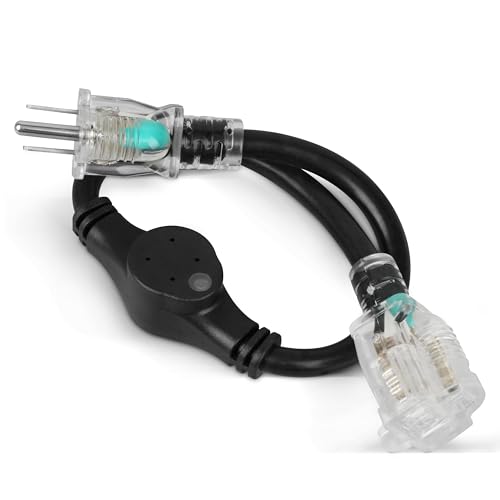
One thermostat plug we did not pick: the HEATIT ET-24 is popular and cheap, but its own listing says it is designed for dry locations only. That rules it out at an outdoor outlet.
Mats vs embedded heating, salt and a snow blower
| Option | Up-front | Work involved | Catch |
|---|---|---|---|
| Heated mats | Tens to hundreds of dollars per mat | None, you plug in | Uses power while on, stored in spring |
| Embedded driveway heating | A project in the thousands | Cables in a new slab, electrician and contractor | Permanent, cannot be added without new concrete |
| Salt or ice melter | A few dollars a bag | None | Weaker in deep cold, damages concrete and paws |
| Electric snow blower | A one-time purchase | You still go out | Clears volume, leaves ice behind |
Embedded heating makes sense when the driveway or the steps are being rebuilt anyway: cables go into the new slab on a dedicated circuit, which is a job for an electrician working with a concrete contractor. In Quebec, a licensed master electrician can quote the electrical side. For an existing staircase and a paver path, mats solve the problem for a fraction of the cost with no demolition.
Salt cracks concrete, eats aluminum thresholds, stains a wooden porch and burns a dog’s pads, and it loses its punch as the temperature drops. It still has a place on the driveway; it no longer needs to touch the steps. And for the volume itself, the 30 cm overnight dump, nothing replaces moving it: our guide to the best electric snow blowers in Canada covers that half of the job.
What the American reviews leave out
- The cold limit is printed. HeatTrak states its mats work well down to -8 °F, about -22 °C. On the coldest nights on the Prairies or in northern Quebec, expect the mat to keep ice off rather than melt fresh snow at the full rate.
- Blowing snow is the real test. A step under a roof edge or facing the wind can receive snow faster than 2 inches an hour even in a modest storm. That is where the higher melt rates and full-width coverage matter.
- The circuit is already busy. In a Canadian winter, the outdoor outlet often runs the block heater too. Two heaters on one 15 A circuit is how a breaker ends up tripping at 5 a.m.
- Storage decides the lifespan. Rinse off the sand and salt in spring, dry the mat fully and store it flat or loosely rolled. A mat folded in half can crack its heating element.
Where to buy in Canada
| Retailer | Strength | Note |
|---|---|---|
| Amazon.ca | Full HeatTrak and SEAL ranges, mats with and without power units | Check whether the listing says mat only |
| Home Depot | Seasonal heated mats in store and online | Selection changes from one winter to the next |
| Canadian Tire | Winter-season stock and promotions | Call ahead, stock thins out after the first storm |
| RONA, Canac, BMR | Hardware stores that may carry them in season | Check the online listing before you drive |
Wherever you buy, check three things on the listing: whether the power unit is included, whether the connectors match your other mats, and the amps or watts per mat. Those three decide whether the system works, what it costs to run and how much of the circuit it takes.
Frequently asked questions
Do heated snow melting mats really work?
Yes, if they are switched on before the snow starts. Snow that lands on a surface that is already warm melts on contact. HeatTrak and SEAL state about 2 inches (5 cm) per hour, Mazulora 3 inches. As long as snow falls slower than that, the step stays clear. A cold mat under 30 cm of snow will take hours to catch up, and the meltwater can refreeze around it.
Can you drive on a heated snow melting mat?
Only if the manufacturer says so. None of the in-stock mats we checked on Amazon.ca states a vehicle load rating; the one listing that called itself car-safe was not in stock. A runner listed for driveways is not the same thing as a mat rated to be driven on, so ask the seller before you park on it.
How many heated mats can I plug into one outdoor outlet?
Add up the amps printed on each mat. HeatTrak and SEAL cap a chain at 13 A per power unit. As a rule of thumb for a load that runs for hours, keep a 15 A circuit at or under 12 A, which is 1,440 W at 120 V. That is four HeatTrak 20 x 60 in walkway mats, or fifteen 10 x 30 in stair mats. Nothing else should share that circuit in winter.
How much does a heated outdoor mat cost to run?
Watts times hours, divided by 1,000, gives kWh; multiply by your rate. Using Hydro-Québec's Rate D upper tier of 11.142 cents per kWh as an example, a 228 W entrance mat on for 10 hours uses 2.28 kWh, about $0.25 a day. Left on around the clock for 30 days it is about $18.29. The hours make the bill, not the mat.
Do I need a GFCI outlet for a heated snow mat?
Yes. A heated mat spends the winter in meltwater. Plug it into an outdoor receptacle with ground-fault protection and a cover that stays closed with the plug in. The GFCI cord some mats ship with adds protection at the mat; it does not make an unprotected outlet acceptable.
Can I use an extension cord with a heated mat?
Avoid an indoor cord: the jacket is not made for -25 °C or for water. If you must, use the shortest outdoor-rated cord in 14 or 12 gauge and keep the connection off the ground. HeatTrak sells watertight cable extenders that use the same connector as its mats, which is the cleaner answer for that brand.
Should I leave heated mats on all winter?
You can, and the mats are built to stay outside all season, but leaving them powered on mild, dry days is paying for nothing. A thermostat plug cuts the days above freezing; switching on when a storm is forecast cuts even more. Ice from overnight refreezing is the one case where letting them run through the night pays off.
Are heated stair mats safe for pets?
They remove the reason to put salt on the steps, which is what hurts paws. HeatTrak's own listing says never to use its mats for animals or animal houses, so never use one as a pet bed or inside a doghouse.
Keep reading
Ice on the roof edge or a pipe that freezes every January? Our guide to heat tape for roofs and pipes in Canada uses the same circuit math. The outdoor outlet doing double duty? Read the block heater guide for Canada before you plug both in. For the volume of snow itself, see the best electric snow blowers in Canada, and if you work in the garage all winter, the best garage heaters in Canada.